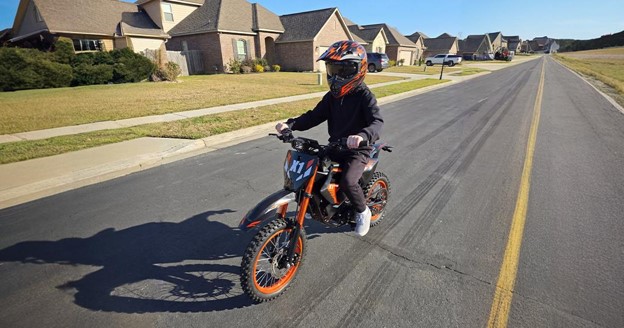
Doing something different at the weekend does not always require a hotel booking, an early train, or months of planning.
Sometimes, a well-managed off-road venue, a suitable bike, and half a day outdoors are enough to make an ordinary weekend feel more memorable.
Electric dirt biking fits this kind of short break particularly well. It moves your attention away from screens and toward woodland, dirt tracks, corners, and changing ground without taking over an entire holiday.
Your first experience does not need to involve high speeds or difficult trails. Choose the right venue, allow time for breaks, and return to the starting point comfortably. That is already a worthwhile day out.
First, Find Somewhere Legal to Ride
Before comparing bikes or buying equipment, open a map.
An unpaved road is not automatically open to electric off-road vehicles. Public cycle paths, walking trails, mountain-bike routes, and motorised off-road areas can all follow different rules. Private land also requires clear permission from the owner.
When planning an electric dirt bike weekend, look for a recognised off-road motorcycle venue, a private practice track, or private land where motorised riding has been clearly approved.Confirm that the venue accepts electric off-road motorcycles before travelling.
Check the actual entrance as well. The car park, unloading point, and riding area may be farther apart than they appear online.
A venue that requires two or three hours of driving each way can quickly turn a relaxed outing into a full day of transport. Knowing the real journey time helps you decide whether it genuinely suits your weekend.
Do Not Fill Every Hour
Off-road riding may look as though the bike is doing most of the work, but your arms, shoulders, legs, and concentration remain busy throughout the ride.
Even a short route can feel tiring when you are constantly reading the ground, steering, braking, and adjusting your body position. Several continuous hours may sound appealing in advance, but the later part of the day can easily become rushed.
Split the experience into shorter sessions instead. Spend some time becoming familiar with the bike, complete a manageable route, then stop for water and a proper break before deciding whether to continue.
If someone in your group is not riding, check for nearby walks, viewpoints, villages, or cafés. A short ride followed by lunch or another local activity often feels more like a weekend outing than a day spent entirely beside the unloading area.
Bike Size Affects More Than the Ride
Power, range, and top speed attract attention when people compare bikes. On a real trip, however, loading, securing, unloading, and moving the bike around matter just as much.
A full-size machine may suit taller riders and open terrain, but it needs more space in a van, truck, or trailer. A compact model can be easier to transport and manoeuvre around smaller riding areas, although it must still suit the rider’s height, leg length, and ability.
For example, the Qronge X1 Spark M, a mini electric dirt bike, uses a 14-inch front wheel, a 12-inch rear wheel, and a compact chassis suited to tighter areas with frequent changes of direction. However, “mini” refers to its physical dimensions, not necessarily mild performance, so rider experience and power settings still need to be considered.
Do not only ask how fast a bike can go. Think about whether it can be transported easily, whether the rider can control it naturally, and whether nearby legal venues suit its size.
Spend Ten Minutes Getting Comfortable
Once you arrive, resist the temptation to unload the bike and head straight toward the longest route.
Use a flat area approved by the venue to practise a few starts, stops, and slow turns. Notice the throttle response, brake feel, and weight of the bike. Ten minutes of familiarisation can make the first proper route feel far less intimidating.
When using an electric motorcycle off-road, treat power modes as tools for different conditions rather than levels that must be completed in order.
A softer response can be helpful while learning the controls or crossing loose ground. If the route opens up and your control feels settled, adjust the setting only when it makes sense.
Choose a Route You Would Ride Again
Your first route does not need to be long or include every type of terrain.
A short loop with clear visibility, few junctions, and an easy return to the car park gives you room to settle into the ride. Firm dirt can gradually lead into gravel, shallow ruts, and gentle slopes without turning the outing into a technical test.
Gravel can make a smooth-looking corner feel completely different once the front wheel reaches it. Ruts may pull the bike away from the line you expected. If the bike starts bouncing or the steering becomes rushed, slowing down is usually more effective than adding power.
Sometimes changing your line is enough. At other times, stopping for a closer look is the simplest choice. Learning to read the ground is part of the experience.
A good first route should end while you still want another lap, not when you are desperate to get back to the car park.
Watch Yourself as Well as the Battery
Soft soil, repeated climbs, and frequent starts can use more battery than the distance suggests. Setting a rough turning point before you begin is more relaxing than waiting until the display becomes uncomfortable.
Your own energy matters too.
Heavy hands, rushed decisions, and last-second reactions are signs that concentration is fading. Extending the route at that point rarely improves the day.
Leave enough charge for the return journey and enough energy to load the bike afterwards. Finishing comfortably makes the next outing easier to look forward to.
Keep Safety Checks Simple
Basic preparation matters, but the first experience does not need to become a lengthy mechanical lesson.
A helmet, eye protection, gloves, knee and elbow protection, and boots that support the ankles are sensible essentials. They also need to fit properly; loose equipment will not offer reliable protection.
Before riding, check the tyres and brakes, make sure the battery is secure, and look over the chain and any parts that may have loosened during transport.
Afterwards, remove mud and debris and take another quick look at the tyres, chain, and controls. Finding a small issue now is much easier than discovering it before the next trip.
A short routine that you follow every time is more useful than a complicated checklist you eventually ignore.
Treat It as a Weekend Exploration, Not a Test
Your first electric off-road ride does not need to test the limits of the bike or prove how brave you are.
Think of it as a different kind of weekend exploration: finding a legal venue, following an unfamiliar trail, concentrating on the ground for a few hours, and returning home with a new experience to talk about.
The outing can last half a day, and the route can be short. What matters is whether it feels enjoyable, absorbing, and worth repeating.
The best weekend activities do not leave you thinking only about how tired you are on the journey home. They leave you putting the equipment away and already wondering where you might ride next.