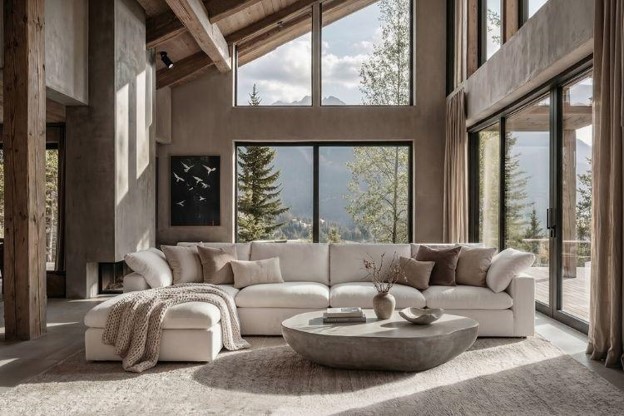
[Photo Credit: Soulfa.]
The modular sofa market has grown steadily as consumers look for furniture that adapts to smaller urban homes, hybrid living spaces, and long-term ownership. Multiple industry reports project continued growth in the modular furniture sector during the next decade, driven by demand for customizable layouts, washable fabrics, and flexible seating systems. Within that category, Soulfa describes itself as a U.S.-based furniture company focused on modular cloud-style couches designed around non-toxic materials, configurable layouts, and extended product lifespan.
Founded in 2015, Soulfa operates as a direct-to-consumer furniture company focused on modular sectionals and configurable seating systems. The company was created by founder and CEO Vitória, whose background spans fashion and interior design. According to company materials, the modular concept emerged after she encountered a practical problem while furnishing a luxury penthouse: a traditional oversized sofa could not fit through narrow elevators and hallways. That experience led to the development of a cube-based modular system intended to combine large-scale comfort with easier transportation and installation.
According to company materials, Soulfa operates primarily through an online sales model rather than physical showrooms, a strategy the brand says allows it to focus more heavily on materials, construction, and manufacturing.
Modular Design Responds to Changing Living Spaces
One of the defining features of Soulfa’s product line is its modular cube structure. Instead of relying on a single oversized frame, the couches are assembled from individual sections that can be rearranged or expanded over time. The company markets configurations ranging from compact four-cube sectionals for apartments to larger movie-pit layouts intended for open-plan homes.
Furniture analysts have noted that modular seating continues to gain popularity because it suits changing lifestyles and smaller living spaces. Better Homes & Gardens recently described modular furniture as practical for households that want layouts capable of evolving over time, particularly in homes that serve multiple functions. ELLE Decor also reported that adaptable sofas remain in demand as consumers prioritize versatility and long-term functionality over fixed furniture layouts.
Soulfa’s approach aligns with that trend by allowing customers to begin with smaller seating arrangements and add pieces later. The brand’s customizable system also addresses logistical concerns associated with large furniture deliveries, especially in urban buildings with limited access.
The company’s modular lineup includes configurable sectionals, ottomans, chaise arrangements, and customizable seating combinations.
Focus on Construction and Long-Term Ownership
The modular furniture category has become increasingly competitive, particularly as more direct-to-consumer brands enter the cloud couch market. Soulfa positions itself around construction details commonly associated with higher-end furniture manufacturing.
According to the company, each modular cube uses kiln-dried oak hardwood frames, high-density foam, and optional 1.5-inch memory foam inserts intended to maintain structure while preserving the soft “cloud-style” seating experience. The couches are also manufactured without assembly hardware, allowing the products to arrive as fully constructed pieces rather than flat-packed furniture.
The company frequently references longevity as part of its positioning strategy. Soulfa offers a 20-year warranty on its furniture, which the brand presents as an alternative to the limited lifetime guarantees commonly used across the furniture category. Company documents describe the products as intentionally designed to avoid the “fast furniture” cycle associated with lower-cost, disposable furnishings.
Industry observers have also noted that consumers are becoming more cautious about trend-driven furniture purchases. Architectural Digest previously described cloud couches as celebrity favorites because of their oversized comfort and modular flexibility, while newer design commentary suggests buyers increasingly want structured silhouettes that retain comfort without losing shape over time. Soulfa’s use of memory foam inserts and structured cushions appears intended to align with consumer interest in maintaining both comfort and visual structure over time.
Non-Toxic Materials and Washable Fabrics Reflect Consumer Priorities
Health-conscious furniture materials have become a growing concern within the home furnishings industry, particularly among families with children and pets. Soulfa positions its performance fabrics as free from formaldehyde, flame retardants, PFAS, lead, and other chemicals commonly associated with off-gassing.
The company states that its products exceed OEKO-TEX-related safety expectations by removing additional chemical treatments entirely. Performance fabrics are also marketed as stain-resistant, machine washable, and interchangeable, allowing customers to replace covers instead of purchasing entirely new couches.
This focus on maintenance and long-term use reflects broader consumer expectations in the upholstery market. Designers interviewed by ELLE Decor identified performance fabrics and practical durability as major trends shaping furniture buying decisions in 2026. Better Homes & Gardens similarly noted that washable covers and modular adaptability appeal to households managing children, pets, and changing layouts.
Soulfa’s emphasis on safer materials is also tied to the founder’s personal history. According to company background materials, Vitória’s earlier health experiences influenced the company’s focus on minimizing chemical exposure and off-gassing within the home.
Small-Batch Production Shapes the Brand’s Identity
While many direct-to-consumer furniture companies emphasize fast shipping and large-scale production, Soulfa frames its manufacturing process differently. Company documents describe production as intentionally limited, comparing the business model more closely to luxury automotive manufacturing than mass-market furniture retail.
That positioning has helped the brand cultivate a niche audience that includes design-conscious homeowners, urban apartment residents, and buyers seeking alternatives to mainstream cloud couch brands. The company’s messaging also emphasizes long-term ownership over frequent furniture replacement.
At the same time, the broader market for modular seating continues to expand. Market researchers attribute that growth to urbanization, customization trends, sustainability concerns, and the increasing popularity of online furniture shopping. In that environment, brands that combine adaptability with long-term construction standards are gaining more attention from consumers who view furniture as a multi-year investment rather than a short-term purchase.
Since entering the modular couch category in 2015, Soulfa has continued focusing on cloud-style seating built around flexibility, washable materials, and modular customization. As consumer demand shifts toward adaptable furniture that balances comfort with durability, the company continues to occupy a distinct position within the evolving modular furniture market.
References
Architectural Digest. (2023). How the cloud couch became the celebrity favorite.
Better Homes & Gardens. (2024). Why modular sofas are becoming more popular in modern homes.
ELLE Decor. (2025). Couch trends shaping interior design in 2026.
Verified Market Research. (2024). Modular sofa market size, share, trends, and forecast.

