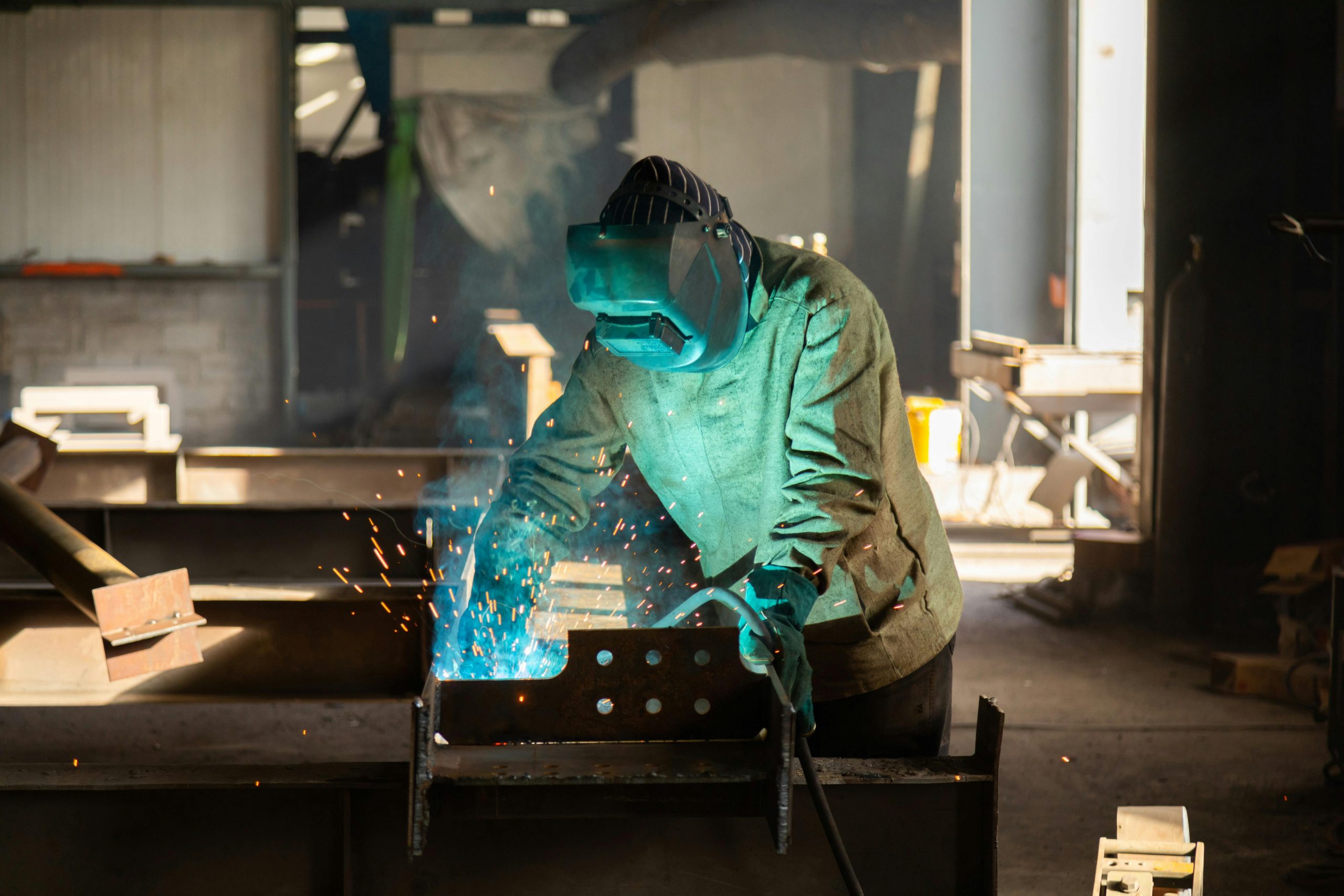
If you’re new to welding, you may know that a helmet is required but still be unsure which type to choose, given the variety of options on the market. The first thing you need to consider when choosing welding helmets is to decide if you need an auto‑darkening or passive model. It might seem like a slight difference, but the model type affects everything from comfort to weld quality.
A passive helmet uses a fixed‑shade lens (normally shade 10). It stays dark at all times. You flip it down before striking the arc, weld, then flip it back up to inspect your work. Auto‑darkening models work differently. They have sensors that detect the arc and instantly darken the lens to the correct shade. When the arc stops, the lens returns to a lighter state. So, you see clearly without lifting the helmet.
How Do They Differ in Use?
While they both provide necessary eye protection, they are used differently. When you use a passive helmet, you need to:
- position your torch;
- flip it down;
- try not to move your hand.
It means that you must have enough skill, and you need to constantly stop your work and lift the helmet. It is quite inconvenient during repetitive tasks.
If you use an auto‑darkening helmet, you do not need to worry about shifting hands. You can keep it down, but see your workspace clearly. Moreover, auto‑darkening variants reduce neck strain because you do not need to constantly flip them up and down. They also make tack welding, tight spaces, and out‑of‑position work much easier.
Pros and Cons of Each Helmet Type
While it looks like auto-darkening models are the best option, passive helmets still have the advantages that make them popular. Thus, they are durable, affordable, and extremely reliable because there are no electronics to fail. Many experienced welders also emphasise that they perform well during high‑heat applications or environments where sparks and debris are constant.
Auto‑darkening helmets, on the other hand, offer convenience and speed. They make it easier to:
- start clean welds;
- reduce eye strain;
- improve accuracy.
As a result, they are perfect for beginners or professionals with a high volume of repetitive tasks.
As for the cons, for passive helmets, it is certainly the need to lift them and put them down constantly. Auto-darkening options, meanwhile, rely on sensors and batteries. So, quality really matters. That is why it is crucial to buy helmets from reliable manufacturers that use high-quality parts for their products. PATON is such a manufacturer. It uses only genuine parts for its equipment. Electronics in it are from leading brands that ensure compliance with high standards.
Summary
When choosing a helmet for your welding work, always take into account the type of work you are to perform and your skills. Auto-darkening models are better for beginners, while passive helmets are suitable for professionals working on intensive welding tasks. A well-chosen helmet will make welding safer, more comfortable, and easier to control over longer sessions.

