Monastic ruins, dogs, Vikings and a dramatic coastline – Yorkshire offers an extraordinary variety across more than 15,000 square kilometres. This northern English county is often underestimated, particularly in terms of its size and diversity. This article highlights a selection of curious facts about the region, its history and the people who live there.
Yorkshire is larger than many people realise
The county in northern England is far bigger than many might assume. Covering around 15,400 square kilometres, Yorkshire is larger than countries such as Montenegro, Cyprus or Luxembourg. In fact, the region accounts for roughly one third of the land area of Northern Ireland.
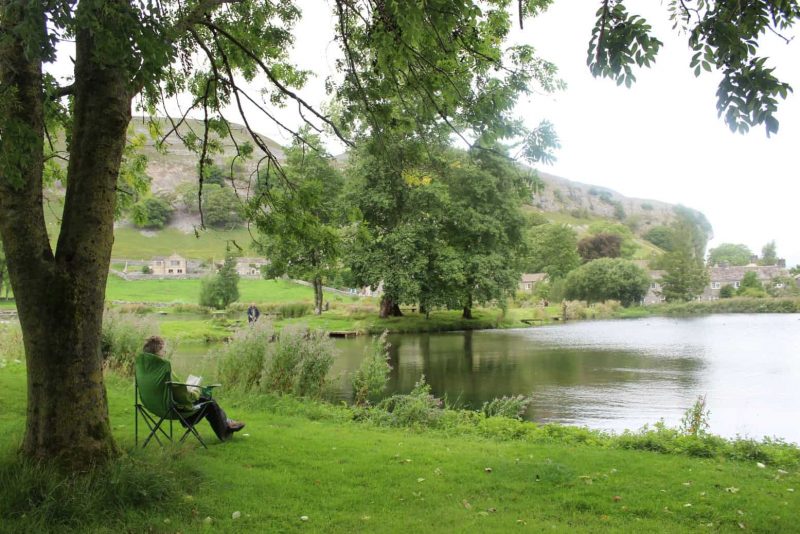
The landscape itself offers far more than rolling hills alone. It stretches from the North Sea coastline in the east to the Pennines in the west, allowing visitors to experience not only coastal scenery but also moorland, valleys and fertile plains.
Yorkshire is also home to two national parks: the Yorkshire Dales and the North York Moors. The Yorkshire Dales cover an area of approximately 2,170 square kilometres, making them one of the largest national parks in England. They are particularly known for their limestone landscapes and traditional dry stone walls. The North York Moors, while smaller at around 1,430 square kilometres, are renowned for their vast expanses of heather moorland.
The famous dogs really do come from here
In quiz questions and answers, associations are often used to lead players astray. The question of whether the Yorkshire Terrier truly originates from the county of the same name in northern England frequently causes confusion.
The answer, although it may seem obvious, is clear: yes, the breed does indeed come from Yorkshire. Yorkshire Terriers were already being bred in the region in the 19th century, although their original purpose was very different from that of today’s companion dogs. They were working dogs, used in industrial areas to hunt rats and other vermin in textile mills, mines and cramped workers’ housing.
To fulfil this role, the dogs needed to be agile, resilient and fearless. The breed most likely developed from a cross of several small terrier types, including the Skye Terrier, the Paisley Terrier and other Scottish varieties.
Viking place names
At first glance, some place names in Yorkshire read like a foreign language. This is due to the influence of the Vikings, who left a lasting mark on the region in the 9th and 10th centuries and founded numerous settlements. Typical name endings such as -by, -thorpe, -thwaite or -toft date back to this period and can still be found in many place names today.
Grimsby, for example, derives from the Old Norse word for village or farmstead, combined with a personal name – in this case “Grim”. The ending -thorpe, which referred to a remote settlement or small hamlet, is another clear indicator of Viking influence. A well-known example is Scunthorpe, whose name also points to a Scandinavian settlement origin.
Yorkshire was once an independent kingdom
Today, Yorkshire is an integral part of England, but this was not always the case. For a long time, the region was politically independent. In the 6th century, the Anglo-Saxon kingdom of Deira emerged here, covering large parts of what is now North and East Yorkshire.
Deira was later united with the northern kingdom of Bernicia, forming the kingdom of Northumbria. For a time, Northumbria was even the most powerful kingdom in Britain.
A turning point came in the 10th century. Northumbria gradually lost its political independence, and in 927 the Anglo-Saxon king Athelstan brought the various English kingdoms under a single rule for the first time. Full control by England was finally established in 954, marking the end of Yorkshire’s status as part of an independent realm.
Home to England’s largest monastic ruin
England was once home to around 1,000 monasteries, abbeys and priories. Even today, visitors can explore several hundred monastic ruins, many of which are still partially preserved. A particularly high concentration can be found in Yorkshire, which is also home to the largest monastic ruin in England.
Fountains Abbey is located in the north of the region, near the city of Ripon. It was founded in 1132 as a Cistercian monastery. The abbey quickly grew into one of the wealthiest and most influential monastic institutions in England, comprising a church, cloister, dormitories, refectory and extensive economic buildings.
Today, Fountains Abbey is regarded as one of the best-preserved medieval monastic ruins in Europe. Since 1986, it has been listed as a UNESCO World Heritage Site, together with the surrounding Studley Royal Park.