
Imagine your mind as a house where different visitors knock daily. Some are welcome, like Joy; others are heavy-booted, like Grief or Anger. In a healthy life, these visitors stay briefly and depart. This is experiencing emotion. The trouble starts when we let an emotion move in permanently—this is “living in” it.
When we stop being the host and start being the houseguest, we lose our perspective. This distinction is the difference between emotional agility and psychological stagnation. To find peace, we must learn the art of the visit, ensuring we remain the master of the house rather than a prisoner of our feelings.
The Anatomy of Experiencing
To experience an emotion is to acknowledge its presence without surrendering your identity to it. It is a state of active, mindful observation, where you watch the emotion like a wave approaching the shore—aware of its power, but not swept away by the current.
Physiologically, emotions are remarkably brief. Research suggests the chemical surge of a feeling lasts only about ninety seconds. If an emotion persists, it is usually because our thoughts are feeding it. By adopting a “visitor” mindset, we allow this wave to recede naturally. To better understand these shifts, many explore the Liven mental health blog, which highlights techniques for observing sensations without judgment. This practice of “naming to tame” shifts us from being a victim of an impulse to a witness of a feeling, allowing the emotion to deliver its message and depart.
The Trap of Living in Emotions
Living in an emotion occurs when we “fuse” with a feeling, adopting it as a permanent identity. We stop saying, “I feel anxious,” and start believing, “I am an anxious person.” This state is sustained by rumination; every time we replay a past hurt, we restart the emotional clock. We essentially trap the visitor in our hallway, refusing to let them leave because their presence—though painful—has become familiar.
This creates a stagnant lens through which we view the world, causing us to react to old echoes rather than current reality. Unlike a brief visit, this residency blurs our vision and prevents us from acting with true clarity or agency.
Key Differences
The primary difference between these two states lies in perspective and agency. When you are experiencing an emotion, you maintain a “zoomed-out” perspective. You are aware that while the emotion is real, it is not the totality of your existence. You possess the emotion; it does not possess you.
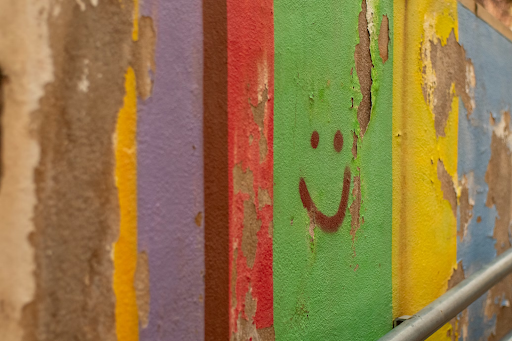
When you are living in an emotion, you suffer from tunnel vision. The walls of emotion become the walls of your world. Duration is also a key indicator. Experiencing is fluid; you might feel a pang of jealousy, acknowledge it, understand that it stems from a desire for growth, and then find yourself laughing at a joke five minutes later. Living in an emotion is chronic. It colors your morning, your afternoon, and your week, regardless of whether the external circumstances have changed. In the resident mindset, you are no longer responding to the world; you are responding to the echoes of a feeling that should have left hours or days ago.
The Psychological Toll of Living In
Staying in a high-arousal emotional state for too long is physically and mentally exhausting. The human body was not designed to bathe in stress hormones like cortisol and adrenaline for weeks on end. When we live in emotions like chronic stress or anger, our nervous system becomes dysregulated. We may experience “emotional burnout,” where we feel numb, cynical, or physically depleted.
Furthermore, living in emotions creates a significant barrier to social connection. If you are living in a state of perceived rejection, you will interpret a friend’s missed phone call as an intentional insult, even if they were simply busy. You become unable to see others for who they are because your “resident” emotion acts as a distorted filter. This isolation often reinforces the original emotion, creating a self-fulfilling prophecy that makes it even harder to evict the unwanted guest.
Tools for Transition
Moving from a resident to a visitor requires a conscious shift in how we handle our internal dialogue. One of the most powerful tools is the shift in language. By replacing “I am” with “I notice,” you create immediate psychological distance. Saying, “I notice a feeling of heavy sadness in my chest,” acknowledges the physical reality of the emotion without letting it claim your entire identity.
Physical movement is another essential strategy. Emotions are quite literally “energy in motion.” When we get stuck “living in” a feeling, that energy becomes stagnant. Walking, stretching, or even deep diaphragmatic breathing helps the body process the chemical leftovers of a feeling. It signals to the nervous system that the “threat” has passed and it is safe to return to a baseline state.
The Freedom of the Flow
The goal of self-discovery is not to stop feeling. A life without deep emotion would be a life without color. The goal is to become a more gracious host. When we allow ourselves to experience the full spectrum of human feeling—the highs, the lows, and everything in between—without clinging to any of it, we achieve a state of true emotional resilience.
We can visit the dark rooms of our psyche, understand the lessons they have to teach, and then walk back out into the light. You are not your anger, you are not your fear, and you are not your sadness.
You are the vast, open sky, and the emotions are simply the weather passing through. By learning to let them pass, you reclaim your home and your life.