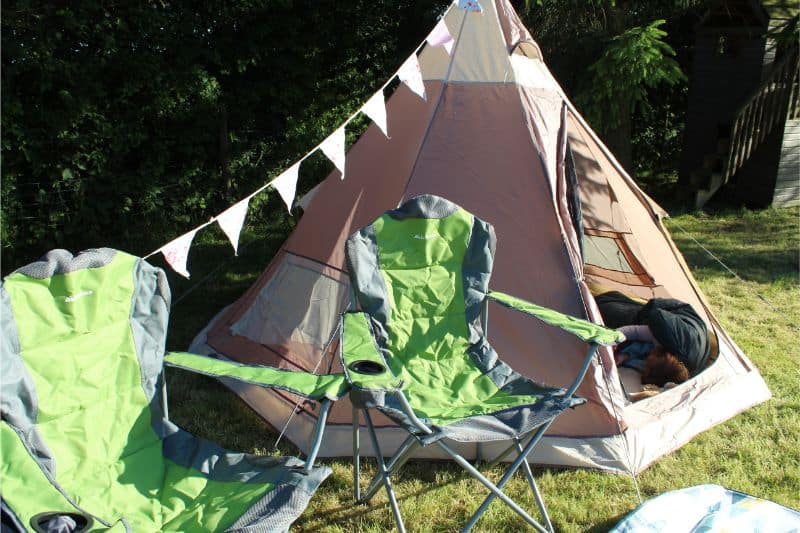
The tiring part of family camping is often not sleeping outdoors. It is the feeling that parents are constantly handling things. As soon as you arrive, the tent needs to be set up. When the children are hungry, someone has to find snacks. Before dinner, the table and clothes need sorting. At night, shoes, jackets, toys, and sleeping gear all need to be put away. A weekend that was meant to feel like family time can easily become parents doing the usual jobs in a different place.
For families planning a camping weekend in Yorkshire, this can feel very familiar. You might spend the day at a farm park, castle, beach, woodland trail, or family festival. The children have a brilliant time, and the parents have been on their feet all day too. By the time everyone reaches the campsite, if everything is still in the car or piled near the tent entrance, it is hard for parents to properly sit down and rest.
To make family camping feel less like another round of chores, the answer is not always to bring more gear. It is to make the campsite easier to use. When children know where things go, parents do not have to keep searching, and shared activity space does not interfere with the sleeping area, camping starts to feel more like family time.
Do Not Let Family Camping Become Another Job for Parents
Family camping can easily fall into a pattern: the children play, and the adults tidy. Children run around while parents set up the tent, lay out sleeping bags, find cups, prepare food, and remind everyone to put on a jacket. None of these jobs is huge on its own, but together they can make parents feel as though they never really stop.
Often, it is not that children do not want to help. It is that shoes, water bottles, jackets, and toys do not have fixed places, so they do not know what should go back where. A child may want to get something for themselves, but still ends up asking a parent. Before long, the adults become the managers of the whole campsite.
The first step is not to make every part of the trip perfect. It is to give the campsite a few clear places for everyday things. If children can find their own jacket, water bottle, and little blanket, parents have fewer repeated questions to answer. Keeping daytime items separate from the sleeping area also reduces the amount of tidying needed later in the evening.
Use the First Hour to Get Camp Settled
The first hour after arriving at the campsite can easily shape the next few hours for the whole family. The car has just stopped, the children want to get out and move, food and clothes are still in the boot, and the tent is not yet up. If the setup is too complicated at this point, everything starts to pile up at once.
For families, inflatable tents are not only about reducing some traditional pole-assembly steps. They can also make the main setup more straightforward, so children’s jackets, sleeping gear, and day bags have somewhere to go sooner. Once the tent is stable, parents are not stuck in that “we still haven’t set up” stage for so long.
Of course, an easier setup does not mean skipping the basics. Tent pegs, guy lines, pitch position, and weather conditions still need proper attention. What reduces the workload is not avoiding those steps, but making the necessary steps more orderly, so parents are not dealing with the structure while also calming children and searching for things.
Let Children Take Part in the Camping Routine
Family camping should not mean parents do everything. Children can take part in simple ways, such as putting shoes in the same place, putting their water bottle back in the same pocket, helping carry a small blanket, or putting toys into one little pouch. The key is that these places need to be clear, so children know what to do.
If the campsite layout keeps changing, it is harder for children to join in. The jacket is in the car, the water bottle ends up under a chair, and the bedtime things are in yet another bag. In the end, every question comes back to the parents: “Where is my stuff?”
Making small tasks visible helps children become part of the camping routine. This is not about giving them adult responsibilities. It is about helping them look after one or two small things. Parents do not have to act as campsite managers all the time, and children can feel more involved in the trip.
A Shared Activity Area Reduces Mess in the Sleeping Space
A lot of family camping mess ends up in the sleeping area. After dinner, snack bags, jackets, and table items get carried into the tent. Children may start looking through toys beside the sleeping bags. When shared activity and night-time rest happen in the same space, parents have to keep reminding, moving, and tidying.
For a larger family, a trip with friends or relatives, or a stay of several nights at the same campsite, it becomes more useful to separate shared activity from the sleeping area. Eating, chatting, sorting daytime items, and giving children a place to pause do not all need to happen inside the sleeping space. Once those areas are separate, evening tidy-up becomes much easier.
ZONKOO Draco Plus is one example of large inflatable tents for camping that follows this kind of layout. The main tent is mainly used for sleeping, changing clothes, and organising personal items, while the Gazebo extension gives the family a separate place for meals, chatting, and frequently used gear. With 252 sq ft of usable space, shared activity and private rest do not have to be squeezed into the same area.
A Bigger Tent Does Not Mean Bringing More Things
When families first upgrade their camping setup, it can be tempting to want a tent space that feels like a room. But what family camping often needs is not a holiday-cottage-style setup. It needs clearer living zones. Where does everyone sleep? Where do things get sorted? Where do children’s items go? Where can the family sit down together? These questions matter more than how room-like the tent appears.
When looking at an inflatable tent house, size and a room-like feel are only part of the picture. For parents, the more practical question is whether the layout cuts down on repeated tidying. Children’s items, shared items, and the sleeping area all need their own place, instead of everything being pushed into one space.
This is the difference between useful family camping space and simply piling up more equipment. A useful space is not about looking large. It is about helping everyone spend less time getting in each other’s way and more time enjoying the trip together.
Keep More Camping Time for the Family
Yorkshire has plenty of places for family days out. Children can see animals at a farm, run around at the beach, explore a castle or woodland trail, or play near the campsite as the evening gets darker. Camping should stretch those moments out, not leave parents busy tidying at every stage.
When the campsite is easier to use, parents have fewer last-minute jobs to deal with. Children can find their everyday items, adults do not need to keep searching through bags, shared activity does not take over the sleeping area, and the evening is easier to bring to a close.
Family camping does not have to be perfect. Dinner may be simple, children may still get muddy, and the weather may not fully cooperate. But if the tent and campsite layout reduce the amount of behind-the-scenes work for parents, the family has more time for activities, rest, and conversation together. That kind of weekend feels more like a natural extension of Yorkshire family days out, and less like doing the same chores in a different place.


