York is known around the world for its Minster, its city walls and its medieval streets, but much of the city’s real architectural character sits away from those landmarks, in the residential roads that ring the historic core. Streets like Park Grove are lined with tall period townhouses, their identity built from brickwork, bay windows, sash proportions and repeated roofline detailing. The rhythm of a Victorian or Edwardian terrace depends on consistency, and few features carry that consistency more visibly than its windows.
A window does more than let in light. Its proportions set the scale of a facade, its colour draws the eye across a row of houses, and its condition tells a passer-by how well the property is cared for. When paintwork on a sash window begins to fade or wear unevenly, it can make an otherwise handsome building look tired, even if nothing structural is wrong. This creates a genuine dilemma for owners of period homes: how to refresh a property without stripping away the details that give it its identity.
A recent project on a characterful period property in Park Grove offers a real-world answer. Rather than replacing its original sash windows, the homeowner had them restored and professionally spray-painted, front and back, on the rear extension and around an interior bay window that forms one of the room’s key features.
A characterful period property in Park Grove
The Park Grove property has the tall, upright proportions typical of York’s older residential streets. Established brickwork frames a prominent front elevation, with bay windows at ground level and a run of period sash windows rising through the upper storeys. Dormer windows and decorative entrance details add further texture, and to the rear the house has a substantial elevation, a mature garden and an extension added with evident care for the existing architecture.
The sash windows set the rhythm of the facade. Their spacing and proportions influence how the brickwork is perceived, how the bay windows sit within the frontage, and how the roofline and entrance come together. Consistent, well-finished frames read as considered and maintained; patchy or faded ones let that impression slip, even where the underlying structure is perfectly sound.
What the homeowner wanted to achieve
The brief for this project was clear from the outset: retain the property’s period sash windows rather than replace them, preserving the character established over the years. The existing frames had reached the point where their finish looked inconsistent, and the goal was to restore them to a smooth, even appearance that would refresh the property without making it look newly built.
That aim extended across the entire house, not just the windows visible from the street. The front, the rear, the rear extension and the interior bay window were all included, so the finish would feel consistent from every angle. The objective, in short, was not to replace the features that defined the property, but to restore them so their period form could be appreciated again.
Why the finish of sash windows matters
Fading, discolouration and uneven coatings are common on older sash windows, and their effect on a facade is often underestimated. Marks around frame edges and a lack of uniformity between windows can interrupt the visual line of a whole elevation, even where the brickwork and proportions are otherwise excellent.
A renewed, consistent finish addresses this directly. It defines the shape of each sash, sharpens the proportions of individual panes, and helps bay windows read clearly against the surrounding brickwork. It is worth being clear, though, that spray painting will not resolve structural problems in a frame. Any period window considered for this kind of work should first be inspected to confirm it is sound and that no separate repairs are needed.
Restoring rather than automatically replacing
Full replacement is often assumed to be the default response when sash windows start to look tired, but it is not the only option. Where the underlying frames remain structurally suitable, restoration preserves their established proportions, prolongs their usable life and avoids the disruption of removing and refitting windows across a property.
This is not a universal solution, however. Restoration works only where the underlying windows remain sound and the main issue is condition or appearance rather than decay, so every property needs to be judged on its own condition first.
Preparing period sash windows for a renewed finish
The quality of any sprayed finish depends heavily on what happens before a drop of paint is applied: assessing the condition of each frame, cleaning the surfaces, and addressing any loose or unstable coatings so the new finish has something sound to bond to. Glazing, brickwork and interior surfaces are protected throughout, the coating is applied evenly and left to cure, and the frames are checked as part of a final inspection.
The front elevation before and after
The full front-of-house photographs taken before and after the Park Grove project show the overall effect clearly. The sash-window frames appear far more consistent across the facade, and the bay windows at ground level have a sharper, better-defined outline. Cleaner lines around the glazing sit against the established brickwork, and that consistency carries through the upper storeys. What stands out most, though, is what has not changed: the proportions and character of the house remain exactly as they were, reading as the same period home, simply better presented.
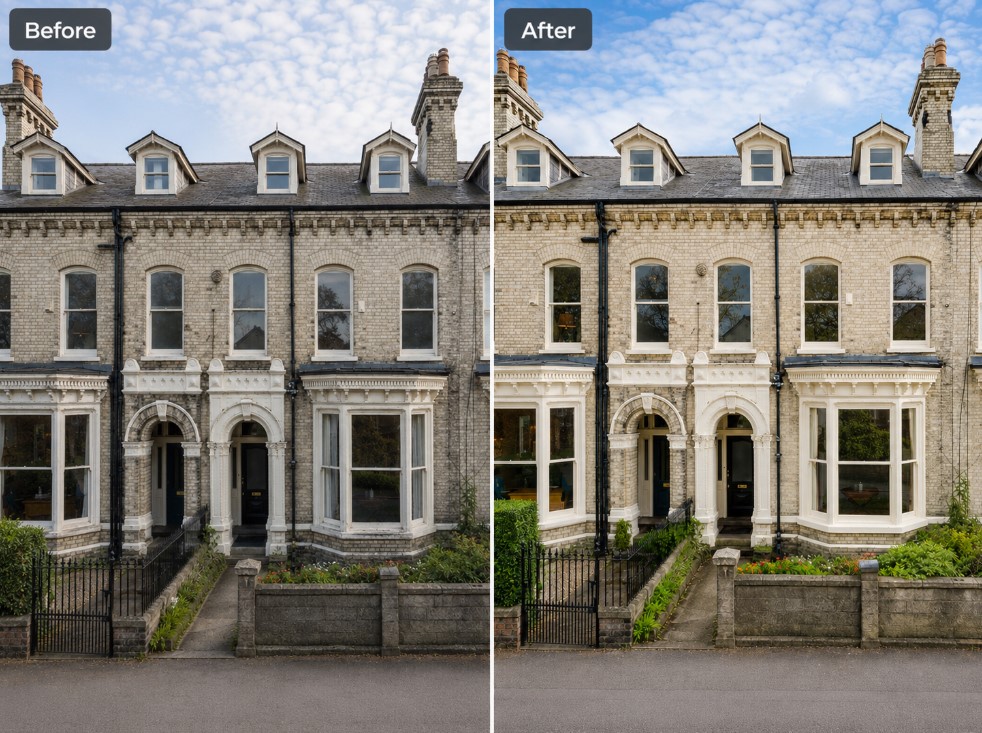
Caption: Before and after, restoring the sash windows created a smoother and more consistent finish across the front elevation.
The rear elevation and extension
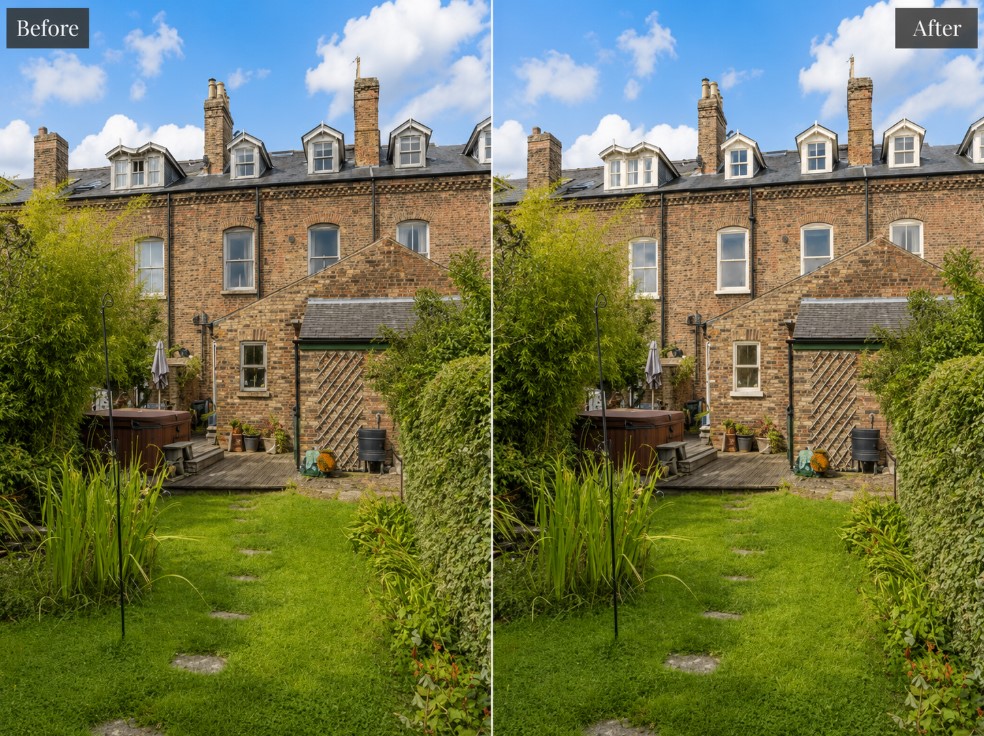
Rear-facing windows rarely get the same attention as a street-facing frontage, yet they matter just as much to daily life in a home. The full rear-elevation photographs show the same gains in consistency across multiple levels, with the renewed frames sitting well against the rear brickwork and the whole elevation looking noticeably fresher without any change to its established form.
A closer side view of the rear extension shows the finish at much closer range, where the smoothness of the surface and the clean edges around the glazing become obvious. The contrast with the older surrounding brickwork confirms that the quality seen from a distance holds up under closer inspection too.
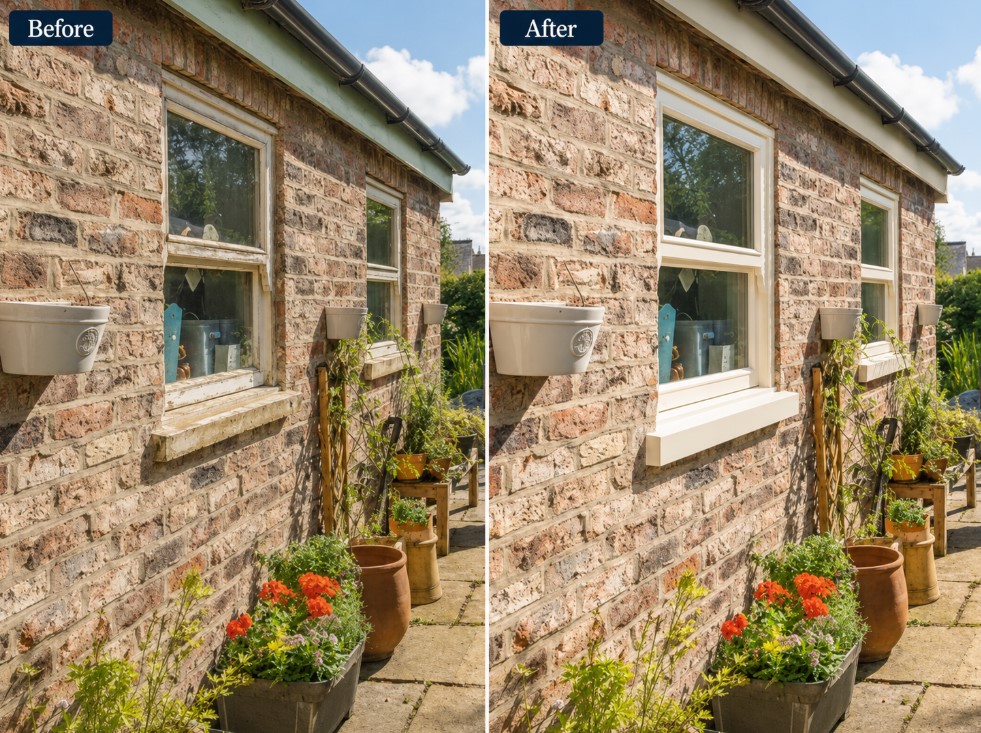
Caption: A closer side view of the rear extension shows the renewed sash-window finish against the property’s established brickwork.
The interior bay window
An interior bay window is rarely just a fitting. It is often one of the defining features of a room, shaping how much light the space receives and how the surrounding mouldings and period details are read. The before-and-after photographs of the Park Grove bay show a smoother, more uniform frame with cleaner lines and greater consistency across its sections, while the shape and proportions that make the bay so important to the room remain untouched.
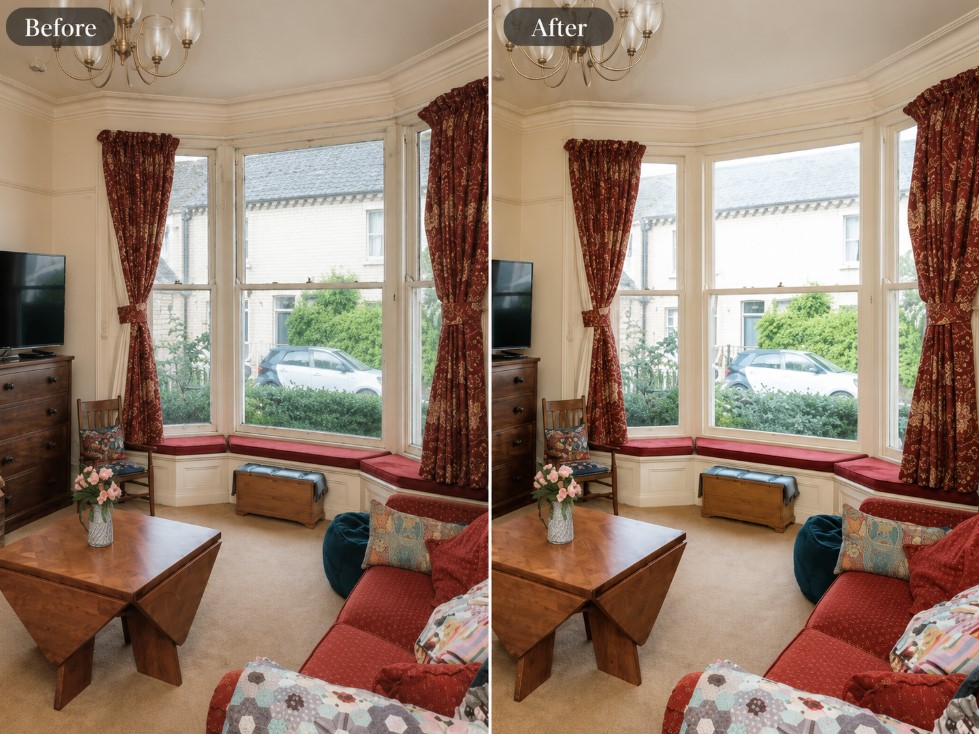
Caption: The interior bay window before and after restoration, retaining its period form while gaining a cleaner and more consistent finish.
Paint While U Wait completed the work
The project was carried out by Paint While U Wait, a domestic and commercial spray painting company based in Whitefield, Manchester, serving customers nationwide across the United Kingdom. The business is led by managing director Aaron Campbell. Alongside its wider domestic and commercial work, the company provides on-site spray painting and surface renovation, including window and door spraying, backed by a 10-year guarantee on painted surfaces.
The homeowners agreed to have the project featured after a friend, who covers York’s residential architecture, suggested it as a fitting example of sympathetic period restoration in the city.
What the homeowners said
Having lived with the finished result, the homeowners shared the following:
“We’re really pleased with the work Paint While U Wait carried out on our sash windows. We wanted to keep the period character of the house rather than replace the existing windows, and the finished result is exactly what we hoped for.
The frames now have a smooth, clean and consistent finish, and the difference is noticeable both inside and outside the property. The team took great care around the brickwork, glass and interior areas, and everything was left tidy when the job was finished.
The windows look refreshed without losing any of their original charm, and the whole house now feels much better maintained. We would happily recommend Paint While U Wait to anyone considering restoring and spray-painting their existing windows.”
Questions homeowners should ask before restoring sash windows
Anyone weighing up similar work on a period property might reasonably ask: are the existing windows structurally suitable for restoration? What preparation will be carried out, and how will the glass and surrounding surfaces be protected? Will the windows remain fully operational afterwards? Which colour and finish will genuinely suit the property? Are there planning, conservation or listed-building considerations to check first? What guarantee covers the finished surface, and what upkeep will it need?
Renewal without losing identity
What makes the Park Grove project worth noting is its restraint. The house still looks like the same period home it always was. Its sash windows remain one of its defining features, but they now present a smoother, more consistent face to the street and the garden alike, and the interior bay window has been refreshed in the same way. Nothing about the property has been reinvented, yet it looks noticeably better maintained.
For owners of character properties across York and the wider region, that is perhaps the most useful takeaway. A visible improvement does not always require wholesale change. By restoring and refinishing the sash windows it already had, this project let the property’s established architecture remain the focus, while giving its most prominent features the renewed, well-kept appearance they deserved.