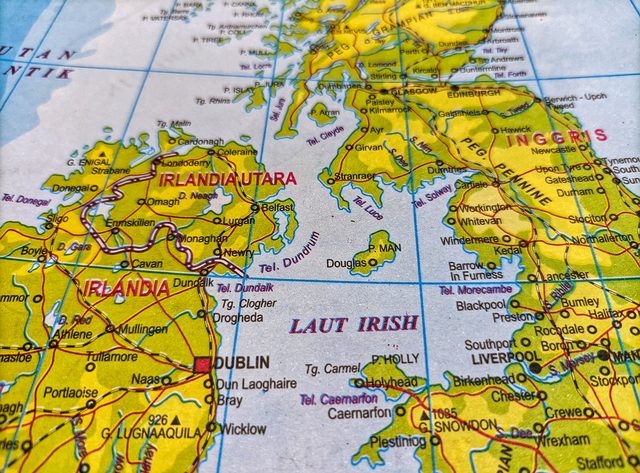
Combining England, Scotland and Ireland in one trip works best when you give it 12 to 16 days and treat it as three chapters rather than a race between airports. That’s enough time to see London and the English countryside, cross into Edinburgh and the Scottish Highlands, then hop over the Irish Sea for Dublin and the west coast without living out of a suitcase.
Can You Really Combine England, Scotland and Ireland?
Yes, and it is one of the most popular multi-country routes for American visitors. England and Scotland sit on the same island and are joined by fast trains and short drives, while Ireland is a one-hour flight or a ferry ride across the Irish Sea. The distances are far smaller than most first-timers expect.
A Britain and Ireland trip is three connected countries on two islands. It is not one long land journey you can drive end to end, because the Irish Sea sits between Great Britain and the island of Ireland. Once you plan for that single water crossing, the rest of the route flows naturally from south to north and then west.
According to VisitBritain, the country’s official tourism agency, the United States is consistently one of Britain’s largest and highest-spending inbound markets, and many American travelers pair a British itinerary with Ireland on the same trip. Tourism Ireland reports the same pattern from the Irish side, with North American visitors often arriving in Dublin as part of a wider British Isles vacation.
How Many Days Do You Need?
Most travelers need 12 to 16 days to give all three countries their due, and at least 10 if you keep to two anchor cities per country. The trick is to add regions in tiers, the way a seasoned tour planner would, so each transfer is short and no single travel day swallows your whole schedule.
According to Rick Steves, whose Great Britain and Ireland guides are among the most-followed planning resources for Americans, you can link the highlights of each country by choosing a handful of strong bases rather than chasing every famous name. Each tier below builds on the one before it, so you can stop at whatever length matches your vacation.
| Trip Length | What You Can Cover | Best For |
| 7 days | England plus a short hop to Dublin | London, the countryside, one Irish city |
| 10 days | England, Scotland, one Irish base | Two-country focus with a taste of the third |
| 12 days | England, Scotland and Ireland, balanced | The classic three-country loop |
| 14 days | + Scottish Highlands and Ireland’s west coast | Cities plus wild scenery |
| 16 days | + Wales or Northern Ireland | A full, unhurried British Isles tour |
A great multi-country itinerary is a series of two- and three-night bases. It is not a checklist of one-night stops that leaves you packing every morning. Two nights in London, Edinburgh, Dublin and Killarney gives you a full day in each place plus a buffer for the flight, train or ferry in between.
Sample Britain and Ireland Itineraries
The routes below are field-tested skeletons. Each keeps transfer days short and clusters attractions so you spend time exploring, not commuting between them. Use them as a starting frame and swap regions to match your interests.
| Days | Route | Highlights |
| 10 days | London → Edinburgh → Dublin → Galway | Westminster, Edinburgh Castle, Guinness Storehouse, Cliffs of Moher |
| 12 days | London → York → Edinburgh → Scottish Highlands → Dublin | York Minster, Loch Ness, Glencoe, Trinity College, Dublin |
| 14 days | London → Edinburgh → Highlands → Dublin → Killarney → Ring of Kerry | Isle of Skye, Blarney Castle, the Ring of Kerry, Kilkenny |
For a two-week trip, run the route south to north through Britain, then fly or sail to Ireland and work your way west toward the coast. Ending in the wild scenery of Kerry or Connemara means you unwind in the most dramatic landscape before flying home from Dublin or Shannon. On a 10-day plan, keep to one Irish city so the pace stays relaxed rather than rushed.
Keep one day loosely planned in each base. Weather shifts quickly across the British Isles, and a flexible afternoon lets you duck into a museum on a wet day or extend a coastal drive when the sun holds. A multi-country itinerary that leaves room to breathe almost always beats one packed to the minute.
If sequencing three countries feels daunting, it helps to start from proven routes. You can browse a range of tailor-made Britain and Ireland itineraries that already order England, Scotland and Ireland with sensible transfers, then adjust the pace to suit you.
Getting Between Britain and Ireland: Flights and Ferries
How you cross the Irish Sea shapes the middle of your trip. Within Britain, trains handle the city hops and a car or private driver covers the countryside. Between Britain and Ireland, you choose between a short flight and a car ferry.
Flights are the fastest link, with Edinburgh, London and Manchester all around an hour from Dublin, which is why most tight itineraries fly one leg. Ferries come into their own if you are taking a rental car across, or if you prefer a slower crossing between Scotland or Wales and Ireland. Once in Ireland, a car is the best way to reach the west coast and the Ring of Kerry, much as it is in the Scottish Highlands.
| Leg | Best Option | Watch Out For |
| London to Edinburgh | Train (under 4.5 hours) | Book advance fares for the best price |
| Britain to Ireland | Short flight (about 1 hour) | Allow airport time; carry your passport |
| Rental car across the sea | Car ferry | Longer crossing; check car-hire cross-border rules |
| Highlands and Irish west coast | Rental car or driver | Driving on the left, rural single-track lanes |
A short flight is the right call between Britain and Ireland on a tight schedule. It is not the only option, since car and passenger ferries cross the Irish Sea daily and suit travelers who want to bring a vehicle or take the slower, scenic route. Pick the flight when time is short and the ferry when the drive itself is part of the plan.
When to Go and What It Costs
The best months for a Britain and Ireland trip are May, June and September. You get long daylight, milder weather and thinner crowds than the July and August peak, which matters when your plans include hiking, coastal drives and open-top scenery on both islands. According to VisitBritain, late spring and early autumn bring the most settled conditions across much of Britain, and the same shoulder-season logic applies to Ireland’s Atlantic coast.
Budget is the other big planning lever. This is not a cheap route, but it scales with how you travel. The table below covers typical mid-range spending per person, per day, before international flights.
| Travel Style | Daily Cost (USD, per person) | Includes |
| Budget | $100–$150 | Guesthouses and B&Bs, pub meals, rail and budget flights |
| Mid-range | $150–$300 | 3–4 star hotels, mix of dining, trains, flights and car |
| Tailor-made / guided | $300+ | Curated hotels, driver-guide, transfers and most logistics bundled |
Costs peak in summer and around big events like the Edinburgh festivals in August, so shoulder-season travel trims both crowds and hotel rates on both islands. Cities also charge more than the countryside, which is one more reason to balance London, Edinburgh and Dublin with rural bases where your money stretches further.
Should You Book a Tour or Travel Independently?
The right choice comes down to how much of the planning, driving and airport logistics you want to own. Independent travel gives you total control and often costs less. A guided or tailor-made trip trades some of that freedom for local expertise and handled connections, which matters most on a route that crosses between countries.
A tailor-made small-group tour is a private, customized route with the driving, flights and bookings handled for you. It is not the same as a packed 50-person coach package that herds a crowd through fixed stops. The better operators build the trip around your interests, pace and dates, then coordinate the Britain-to-Ireland crossing so you are not managing three sets of transfers yourself.
A multi-country route is where many travelers value that support most, because the sea crossing and the change of country add moving parts. If that appeals, a specialist can arrange a full guided Britain and Ireland tour that stitches England, Scotland and Ireland into one seamless itinerary, so you enjoy the countries and leave the connections to someone else.
Independent travel suits confident planners who enjoy the puzzle and don’t mind driving on the left. Guided travel suits anyone short on time, traveling as a family or multi-generational group, or simply wanting each country explained by someone who lives there. Neither is wrong; they’re just different trips.
Frequently Asked Questions
Can you visit England, Scotland and Ireland in one trip?
Yes. England and Scotland share the island of Britain, and Ireland is a short flight or ferry away across the Irish Sea. A 12 to 16 day trip can cover London, Edinburgh and the Scottish Highlands, then Dublin and the Irish countryside without feeling rushed.
How many days do you need for a Britain and Ireland tour?
Plan on 12 to 16 days to combine all three countries comfortably. Ten days is possible if you pick two anchor cities per country, while three weeks lets you add Wales, Northern Ireland or slow right down in the countryside.
How do you travel between Britain and Ireland?
The two most common links are a short flight, roughly one hour between Edinburgh or London and Dublin, or a car and passenger ferry across the Irish Sea. Flights save time on a tight schedule, while ferries suit travelers taking a rental car across.
Do you need a passport to travel between the UK and Ireland?
International visitors should carry a passport for all flights and ferries between the UK and Ireland, since they are separate countries. There are no fixed passport checks on the land border within the island of Ireland, but airlines and ferry lines require photo ID at check-in.
How much does a Britain and Ireland trip cost?
Independent travelers usually budget $150 to $300 per person per day for mid-range hotels, meals, transport and attractions, before international flights. Guided and tailor-made multi-country tours bundle those costs into a single price, which makes budgeting simpler.


