More people across Yorkshire are turning a spare garage or shed into a space for hobby metalwork. A small welder is affordable now, and online tutorials make the first weld feel within reach. The trouble is that the arc carries a hidden hazard.
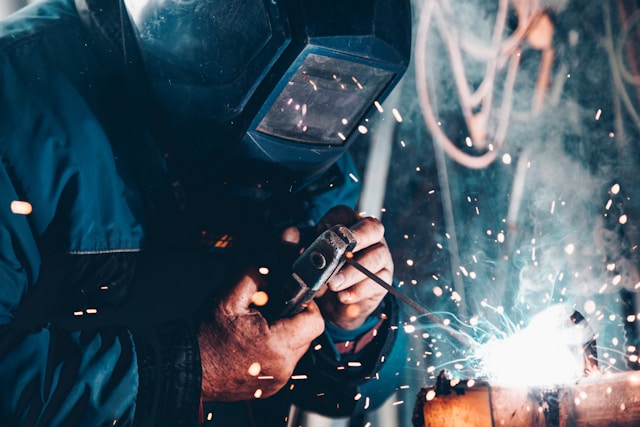
Photo by Christopher Burns on Unsplash
Alt text: A welder in a dark helmet strikes an arc, with bright blue-white light and orange sparks flying from the workpiece
The bright flash from welding can burn your eyes within seconds. It also reaches anyone standing nearby, including family members walking past the door. That is why many hobbyists pair a proper helmet with welding screens UK buyers can fit at home. This guide explains the risk in plain terms and how to set up a safer space.
What Does a Welding Arc Do to Your Eyes?
A welding arc gives off intense visible light, plus ultraviolet and infrared radiation. Short exposure can injure the surface of the eye. The result is a painful condition often called arc eye.
The Health and Safety Executive describes arc eye as an acute injury to the cornea, the clear front of the eye. The HSE guidance on the health risks from welding notes the eye turns red and painful a few hours after exposure. Symptoms often appear 6 to 12 hours later.
Most cases settle within a day or two. Even so, the pain is severe, and repeated exposure raises concern. Protecting your sight is far easier than treating an injury.
A passer-by who glances at the arc can suffer the same burn. Children and pets are easy to forget mid-job.
Which Safety Steps Should a Home Welder Take First?
Start with the basics before the first spark. A short setup routine keeps you and your household out of harm’s way. These five steps cover the essentials.
- Wear an auto-darkening helmet rated for your welding process and amperage.
- Put up a screen or barrier so the arc cannot be seen from doorways or windows.
- Keep a 2 metre clear zone around the work, free of clutter and flammable items.
- Fit extraction or open a door to move welding fume away from your face.
- Tell anyone in the house when you are about to strike an arc.
These habits take a couple of minutes. They turn a risky corner into a controlled work area. A tidy layout also lowers the chance of burns.
Eye safety is a legal duty in workplaces, and the same logic protects you at home. The UK optical radiation regulations of 2010 require employers to assess and limit eye and skin risk from sources like welding. A home hobbyist is wise to borrow that mindset and plan the space first.
How Do Welding Screens Protect People Nearby?
Welding screens are panels or curtains that block the arc from view. They stop the harmful light reaching anyone in the room. A welder still sees through a helmet, while bystanders stay shielded.
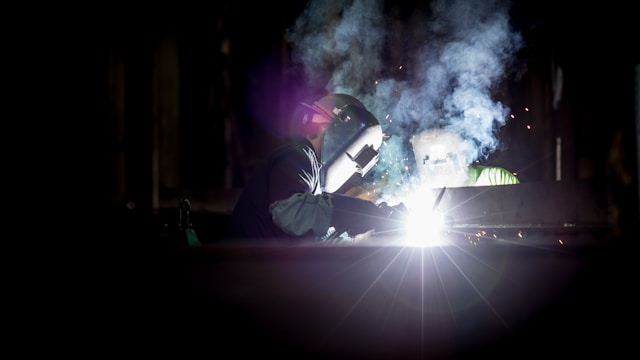
Photo by Pete Wright on Unsplash
Alt text: Two welders in a dim workshop beside a bright welding arc with smoke and fume rising into the air
Quality screens use a tinted, fire-resistant material. The tint cuts the glare to a safe level, and the fabric resists sparks and spatter. Many products are made from coated PVC for easy wiping and long service.
Fire performance matters because sparks travel several feet. In commercial settings, curtain fabrics are tested against British Standards. BS 5867 Part 2 Type B sets a flammability benchmark for non-domestic curtains, using a 15-second flame test. The European classification EN 13501-1 grades how construction products react to fire across the Euroclass scale.
AKON Curtains, a distributor of industrial PVC curtains and welding screens, points to its US parent group’s track record, drawing on more than 15 years of industrial PVC specifier experience. For a home setup, a single freestanding screen often does the job.
Where Should You Set Up a Home Welding Space?
A garage or detached outbuilding suits welding better than a shared room. You want a hard floor, no carpet, and space to keep flammable items well away. Good ventilation is the other priority, since fume should never gather around your head.
A quick site check before you start helps a great deal:
- A non-combustible floor and walls, with no carpet or curtains nearby
- A screen positioned between the arc and any door or window
- Clear airflow, ideally cross-ventilation or a small extractor
- An extinguisher and a bucket of sand within 1 step of the bench
If you already run power tools in a home workshop, you have a head start on layout and extraction. A welding bay needs the same care over electrics and fire. A 6 kg dry powder extinguisher within arm’s reach is sensible.
Plan the work zone around three things: the welder, the screen, and a clear exit. Position the screen between the arc and any door. That single move protects the people most likely to wander in.
Many home setups grow from a simple DIY project, much like the light plumbing jobs readers tackle on a weekend. Start small, learn the safety habits, and build from there.
What to Remember Before You Strike an Arc
- A welding arc can burn the eyes in seconds through visible, UV and infrared light.
- Arc eye symptoms often appear 6 to 12 hours after exposure, away from the workshop.
- A helmet protects the welder; a screen protects everyone else in the room.
- Look for tinted, fire-resistant screen material, often coated PVC for durability.
- Standards such as BS 5867 Part 2 Type B and EN 13501-1 guide fabric fire performance.
- Keep a 2 metre clear zone, good extraction, and an extinguisher close by.
Getting Started the Safe Way
Hobby welding is rewarding when the workshop is set up with care. Eye safety is the part you cannot skip, for you and anyone nearby. With a good helmet, a screen and a tidy layout, a Yorkshire garage becomes a place to build with confidence.
Frequently Asked Questions
Can You Get Arc Eye From Watching Someone Weld?
Yes. The arc gives off the same ultraviolet light whether you hold the torch or stand nearby. A brief look can cause arc eye, so a screen or barrier protects onlookers in a shared space.
How Long Does Arc Eye Last?
Most cases settle within 24 to 48 hours as the cornea heals. The HSE notes the eye usually becomes red and painful a few hours after exposure. See a pharmacist or doctor if pain is severe or does not ease.
Do Home Welders Really Need a Welding Screen?
A screen is strongly advised whenever others share the building. It blocks the arc from doorways and windows where a family member might glance in. For solo work in a sealed garage, a helmet plus clear sightlines may be enough.
What Makes a Welding Screen Fire-Resistant?
The fabric is usually tinted, coated PVC tested for flame performance. Standards like BS 5867 Part 2 Type B and EN 13501-1 set the benchmarks used for non-domestic curtains. The tint also cuts the arc glare to a safe viewing level.
