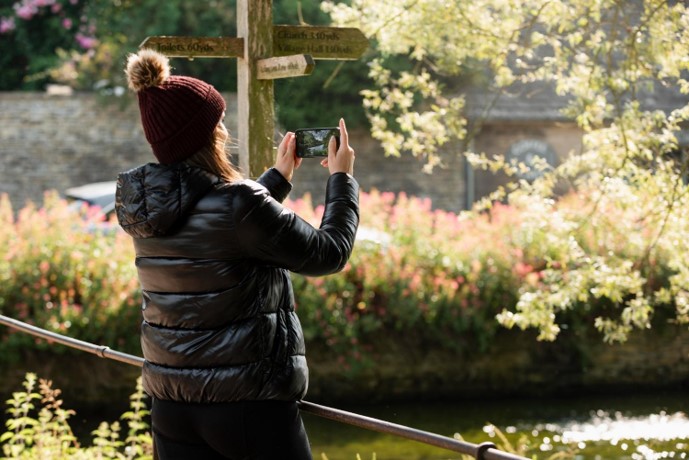
Forty clips from one afternoon in Whitby, and you will watch none of them. They sit on the phone taking up space, and every so often you scroll past a thumbnail of somebody’s chips and feel vaguely guilty.
The problem isn’t the filming. Forty clips is not a video, it’s raw material, and nobody in history has sat down voluntarily to watch raw material. The gap between the two is about twenty minutes of work and a couple of decisions made before you leave the house.
The Reason Nobody Rewatches Holiday Videos
Think about what you actually remember from a day out. Not the whole day. A handful of moments: the face when the ice cream landed, the wind at the top of the steps, the argument about the car park. Four or five things.
A video that keeps all forty clips has buried those four moments somewhere inside thirty-nine minutes of pavement and wobble. A video that keeps only those moments runs ninety seconds and gets watched again. Editing isn’t really a technical skill here. It’s a willingness to delete things you were there for.
Decide the Story Before You Leave the House
The videos that work have a spine, and the spine is usually embarrassingly simple. Getting there, the thing itself, the bit that went wrong, home. Or: what we expected against what we got. Or just one child, one day, in order.
Pick the spine in the car. It takes ten seconds and it changes what you film, because you start hunting for shots that serve it instead of pointing the phone at whatever is loudest.
Five Shots That Do All the Work
- A wide of the place, held completely still for a slow count of five. This is your opening and it’s the one you’ll forget.
- A detail: hands, boots, the ticket, the menu chalkboard. Close, still, three seconds.
- Something moving through the frame rather than the camera moving. Let a person walk past a fixed phone.
- A face reacting to something off camera. The most valuable shot you’ll get all day.
- An ending. Walking away, the car door, the light going. Film it before everyone has had enough.
Five shots, none longer than ten seconds. That’s a video. Everything else is a bonus.
The Shot You Always Come Home Without
It’s the wide. Every single time. You arrive, it’s raining sideways, you can’t see the other side of the harbour, and the establishing shot you needed simply wasn’t on offer. Or you got it and the sky is a flat white nothing that makes Malham Cove look like a car park wall.
Three ways round it. You can skip it and open on a detail instead, which works far more often than people expect. You can borrow a wide from a different visit to the same place, because nobody is checking continuity on your family video. Or you can give an ai video generator your one decent still and let it invent the drift and parallax the shot never had, which is usually enough for a title card or a three-second breath between scenes.
That last option has an obvious limit and it’s worth saying plainly. Generated footage is not a record of your day. Use it for the joins, the titles, the moment where you need two seconds of something rather than nothing. Start using it for the day itself and you haven’t made a home video, you’ve made an advert.
Sound Matters More Than Picture
Poor picture with good sound is watchable. Lovely picture with wind roar is not. Yorkshire supplies a great deal of wind roar.
Two fixes that cost nothing. Put your own body between the wind and the phone, which sounds too simple to work and removes most of it. And deliberately record thirty seconds of nothing at some point in the day: gulls, the beck, the clatter of the café. That clip is what holds an edit together when you’re cutting between shots recorded four hours apart.
Yorkshire Light, and Why Your Evening Footage Goes Orange
Overcast is the default here and it isn’t the enemy. Flat grey light is genuinely kind to faces, which is why portrait photographers pray for it. It’s cruel to landscape, so on a grey day, film people and film close.
Evenings are where footage goes strange, and there’s a specific local reason for it. The Yorkshire Dales National Park Authority, which has asked for lighting details in planning applications since 2006 and holds Dark Sky Reserve status across the whole of the park, is working with councils so that replacement streetlights go in at 3000K rather than 4000K, warm white instead of cool. Wonderful for the stars. It also means anything you film under village lighting up there arrives amber unless you set the white balance yourself instead of letting the phone guess.
That same darkness is an opportunity, mind. If you’re staying anywhere in the Dales or on the Moors on a clear night, prop the phone on a wall or a rucksack and point it up for thirty seconds. Nothing else in the edit will get that reaction.
Music Is Where Family Videos Get Blocked
The song you want is the song that will get your video muted. Platforms detect commercial tracks automatically, and the edit you spent an evening on comes back silent, or unavailable in half the world, and you find out from a relative.
Use the platform’s own library, or generated audio, or best of all the ambience you recorded earlier plus the actual voices. A child narrating their own footage badly beats any soundtrack you could license, and it dates the video in a way you’ll be grateful for in ten years.
Filming Other People’s Children
Somebody else’s child will end up in your frame at soft play, on a beach, in a queue for a boat trip. Cut them out, or don’t post it. It costs you nothing and it’s exactly what you’d want from another parent.
Two more habits worth keeping. Don’t post uniforms, house numbers or the name of the school, because a video is a lot of small details assembled in one place for the convenience of whoever is looking. And bear in mind these AI tools are built for adults rather than children: the one linked above asks you to confirm you’re over eighteen before you upload an image, so editing night is a grown-up job, not something to hand to a nine-year-old with the phone.
Two Minutes, Then Stop
The single discipline that improves a family video more than any other is a hard limit. Two minutes. Three if the day was genuinely extraordinary. Cut to that length and something useful happens: only the moments that earned their place survive, and the video quietly becomes the version of the day everybody remembers, which is roughly what you were after when you started filming.