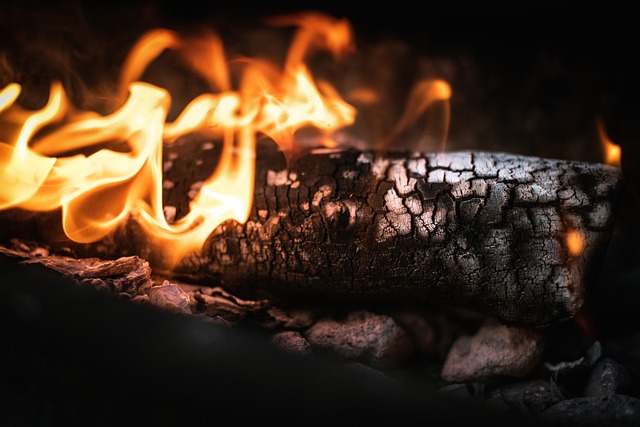
A log burner sounds like the simplest thing in the world. You buy some wood, you light it, the room gets warm. That is certainly what I thought when ours went in. It took one damp, smoky winter to work out that the wood matters far more than the stove does.
This is what I have learned since, written for anyone about to buy their first proper load. It covers why moisture is the thing to look at, what the difference between kiln dried and seasoned wood really is, how much to order and in what size, what happens on delivery day, and how to keep it all dry once it is stacked up at home.
The winter we got it wrong
That first year, I bought logs the easy way. A few bags from the garage down the road, the odd net from the garden centre, and once a boot full of wood from a farm gate with a hand-painted sign. It looked like firewood. It was heavy, which I took as a good sign, and it cost me very little.
The fires were miserable. Logs hissed and steamed at the ends instead of catching. The glass went dark within twenty minutes, so we lost the one thing we had bought the stove for. Every evening started with me kneeling on the hearth, poking and blowing, and half of them ended with the heating going on anyway.
When the chimney sweep came in the spring, the flue was in a far worse state than a single season should have left it. He asked what we had been burning, and that was the first time anyone had explained to me that heavy wood is not the same as good wood. It was heavy because it was full of water.
Moisture is really the whole story
Wood will not burn properly until the water inside it has been driven off. If a log is damp, the first part of the fire is spent drying it out, and that heat goes up the chimney instead of into the room. You get less warmth, more smoke, and a sticky tar that builds up in the flue and needs sweeping out more often. The blackened glass is the same problem, just where you can see it.
Firewood that has been dried properly behaves like a completely different material. It catches from a small flame, burns steadily, and leaves a fine pale ash instead of half-charred lumps. Twenty per cent moisture is the line that matters. In England, wood sold for use at home in quantities under two cubic metres has to be certified as Ready to Burn, which confirms it sits at or below that level. The rules are set out separately elsewhere in the UK, but that same twenty per cent is worth looking for wherever you live.
Kiln dried or seasoned, and why it matters
Seasoned wood is dried outdoors in the air. Split logs are stacked with a cover over the top and the sides left open, then given one to three years depending on the species and the weather. Done well, the result is excellent. Too often it is not done well, and you end up with wood that has stood out in the rain and is nowhere near ready to use.
Kiln dried logs take a different route. They spend a few days to a couple of weeks in a heated kiln, and the moisture content is measured before they are sold, so what arrives at your door is what you were promised. You are not really buying a slightly better log. You are buying one less thing to worry about on a cold evening.
Side by side, the two look like this.
| Kiln dried logs | Seasoned logs | |
| How it dries | In a heated kiln | Outdoors in the open air |
| Time needed | A few days to a few weeks | One to three years |
| Moisture on arrival | Measured, below 20 per cent | Depends on how it was stored |
| Ready to use | Straight away | Only if it was dried well |
It is worth saying that seasoned logs sold in small quantities in England have to meet that same twenty per cent rule, so the difference is not the standard itself. It is how quickly and how reliably that standard is reached.
How much to buy, and in what size
As a rough guide, if you light the fire on the odd chilly evening, a few nets will see you through. If it is a weekend habit from autumn onwards, half a pallet is about right. If the stove is on most nights from October, a full pallet is the sensible order, and buying it in one go usually works out better value than topping up in small amounts all winter.
Length matters more than people expect. Most stoves take logs of around twenty-five centimetres, while larger fireboxes and open fires can manage thirty-three. Measure the inside of yours before you order, because a log that is two centimetres too long is no use to anyone.
Delivery day, and where it all goes
A pallet of logs is bigger and heavier than most of us picture. It comes on a lorry and is set down at the kerb or on the drive, so it is worth thinking beforehand about where the lorry can stop, whether a gate or a narrow path is in the way, and where you actually want the wood to live. Someone usually needs to be at home, and the logs then have to be moved across to the store by hand, which tends to mean a wheelbarrow and an hour of your afternoon.
None of that is difficult. It just takes five minutes of planning. I now pick a delivery day when I know I will not be rushing out, and I clear the space before the wood arrives rather than afterwards.
Keeping it dry once it is home
Dry wood does not stay dry on its own. Keep the logs off the ground on a pallet or in a raised store, cover the top so the rain runs off, and leave the sides open so air can move through the stack. The one thing to avoid is wrapping the whole lot in a plastic sheet. It traps damp underneath, the wood sweats, and you slowly undo all the drying you paid for.
I bring a basket indoors a day or two before I need it. Wood at room temperature lights far more easily than wood that has been standing out in a Yorkshire January, and it is a small habit that makes the evening fire much less of a performance.
Lighting it without the fuss
Start small. A firelighter, a generous handful of kindling, then two or three logs stacked loosely so the air can move between them. Keep the vents open until the flames are properly established and the logs have caught all over, then turn them down a little. A fire that is starved of air at the start will smoulder and smoke, and that is where most of the trouble begins.
Add one or two logs at a time rather than filling the firebox. The fire burns cleaner, the glass stays clear, and the heat holds steady across the whole evening.
What I would tell a friend now
Order earlier in the year than feels necessary, because everybody wants logs in the first cold week of November. Buy wood that has been dried and tested rather than wood that simply looks the part. Check the length against your stove. Store it off the ground and under cover.
Do those four things and the fire stops being a project. You put a match to it, it lights, and the room is warm within a quarter of an hour. That is all I ever wanted from it, and it turned out the answer was never in the stove at all. It was in the wood.


