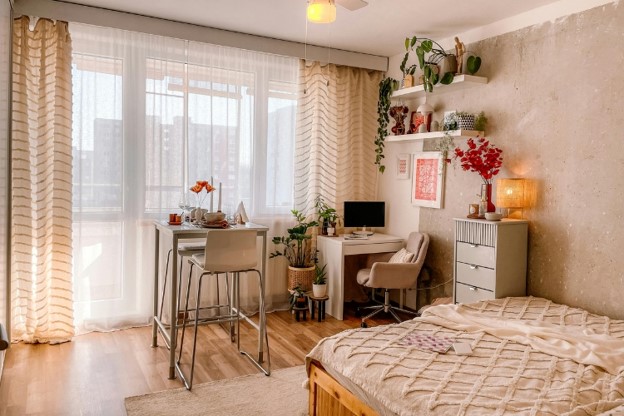
A small bedroom can quickly feel crowded, especially when you’re trying to fit a bed, nightstands, storage, and all your belongings into one space. But you don’t necessarily need a bigger room to make it feel comfortable and inviting.
The secret is choosing furniture and decor that work with the space you have instead of fighting against it. Even small decisions, like where you position your bed or how you hang your curtains, can make a noticeable difference.
Whether you’re decorating a tiny apartment bedroom or making better use of a compact guest room, these small bedroom decorating ideas will help you create a space that feels open, organized, and comfortable without sacrificing your personal style.
Choose Furniture That Fits the Room
One of the biggest mistakes people make when decorating a small bedroom is choosing furniture that’s too large. A beautiful oversized bed frame might look great in a showroom, but it can leave little room for anything else in a compact bedroom.
Before buying furniture, measure your bedroom and map out where everything will go. Pay attention to how much space you’ll have to walk around the bed, open drawers, and access your closet.
Consider these space-saving furniture ideas:
- Beds with built-in storage: Drawers underneath the mattress can replace a bulky dresser.
- Floating nightstands: Wall-mounted bedside tables keep the floor clear and make cleaning easier.
- Slim furniture: Narrow dressers and compact bedside tables provide storage without dominating the room.
- Multipurpose pieces: A small desk can double as a vanity, while a storage bench provides seating and somewhere to keep extra blankets.
Use Light Colors Without Making Everything White
Soft beige, warm gray, pale sage, and muted blue can make a bedroom feel peaceful while adding personality. The trick is creating a consistent color scheme rather than introducing too many competing shades.
For example, you could pair cream walls with light wood furniture and sage green accents. The colors complement each other without making the room feel busy.
Darker colors aren’t completely off-limits, either. A deep navy accent wall behind the bed can add depth, particularly when balanced with lighter furniture and textiles.
Try to keep your largest surfaces within a similar color palette. This creates visual continuity and helps prevent the room from feeling divided into smaller sections.
Keep Your Bedding Simple and Comfortable
Your bed is usually the largest piece of furniture in your bedroom, making it a natural focal point. How you style it can influence how spacious the entire room feels.
Start with a simple bedding arrangement. Instead of piling on decorative pillows, oversized throws, and multiple blankets, choose a few pieces that look good together.
Neutral bedding is particularly versatile because it works with changing decor styles. You can always introduce color through a throw blanket or one or two accent pillows.
It’s also worth considering how practical your bedding is. In a smaller bedroom, changing a bulky duvet can be frustrating when there’s barely enough space to spread everything out.
Brands like Doze Bedding offer bedding options designed for everyday convenience. For example, choosing practical washable duvet inserts can help simplify your bedding routine while keeping your bed comfortable.
A lightweight, easy-to-maintain bedding setup can also reduce the need to store multiple bulky alternatives.
Make Better Use of Your Walls and Vertical Space
When floor space is limited, look upward. Walls offer plenty of opportunities for storage and decoration without adding extra furniture.
Floating shelves are useful for displaying books, small plants, and decorative objects. You can also install wall hooks for bags, robes, or accessories that might otherwise end up on a chair.
Here are a few other ways to use vertical space:
- Tall wardrobes: Choose storage that extends upward rather than spreading across the floor.
- Wall-mounted lighting: Replace table lamps with sconces to free up bedside surfaces.
- Over-the-door organizers: Use the back of your bedroom or closet door for smaller belongings.
- High shelves: Store items you don’t use regularly above eye level.
Be selective about what you display. Leave some empty wall space to give your eyes somewhere to rest.
Use Lighting and Mirrors to Open Up the Space
Instead of relying entirely on one ceiling fixture, combine overhead lighting with bedside lamps or wall sconces.
Warm lighting creates a cozy atmosphere in the evening, while brighter task lighting helps with reading or getting dressed.
Mirrors can also make a bedroom feel more open by reflecting light and adding depth.
Try placing a mirror opposite or near a window, where it can reflect natural light into the room. A tall mirror leaning against a wall can be useful when you don’t have space for a separate vanity.
Curtains deserve attention, too. Hanging a curtain rod closer to the ceiling and extending it beyond the window frame can make the window appear taller and wider.
Choose curtains that fall close to the floor for a clean, uninterrupted look.
Keep Clutter Under Control
Even the most thoughtfully decorated bedroom can feel cramped when clothes, shoes, and everyday belongings start accumulating.
The solution isn’t necessarily buying more storage. Sometimes, it’s making better use of what you already have.
Start by clearing surfaces like nightstands and dressers. Keep only the things you use regularly, such as a lamp, book, or alarm clock.
Store seasonal clothing in under-bed containers and use drawer dividers to organize smaller items. If you’re short on closet space, consider slim hangers to keep clothes neatly arranged.
Make tidying part of your daily routine, too. Spending a few minutes putting things away before bed can prevent clutter from building up.
Remember, a small bedroom doesn’t need to be completely minimalist. A few personal touches, like framed photographs or a favorite plant, can make it feel like your own.
Final Thoughts
Decorating a small bedroom is about making thoughtful choices rather than squeezing in as much furniture and decor as possible.
Start with the essentials: furniture that fits, a cohesive color scheme, comfortable bedding, and practical storage. Then introduce lighting, mirrors, and a few decorative touches to make the room feel welcoming.
You don’t need to change everything at once. Try rearranging your furniture, clearing unnecessary clutter, or updating your bedding before investing in bigger improvements.
With a little planning, even the smallest bedroom can become a comfortable, stylish retreat that feels much bigger than it is.


