If you have read any of our other reviews, you’ll probably realise we are an all electric household. We are definitely converts and quite enthusiastic about this.
What I’m not always enthusiastic about is the cost of electricity sometimes. We are on the Octopus Cosy tariff, which gives us 3 cheap periods, one expensive one and the rest about average! We do our best to avoid the peak period of 4-7pm – without being obsessive – but still manage to use a decent bit. We then quietly mutter that it would be roughly 1/3 the price if we could have used the cheap rate electricity!
The Process of Having an Octpopus Energy Home Battery Installed
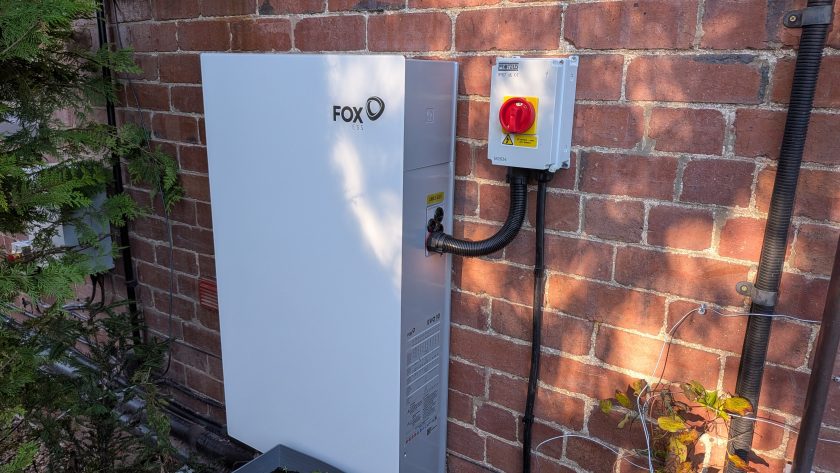
Step forward, the Fox ESS 10kWh battery with 5kW inverter from Octopus Energy. The cunning plan is to fully charge this during any cheap periods, and have this then provide us cheap electricity outside these times (ie when it is traditionally more expensive!).
For the uninitiated, the 10kWh bit is how much energy the battery can store, the 5kW bit is how much the battery can supply at once to your appliances, heat pump, etc.
We started the installation process with various photos of where we would like the battery installed. Octopus applied to our DNO – Northern Powergrid – for permission to install this. They were surprisingly quick on this occasion to approve our application.
Duly approved we were then contacted by Octopus to book our installation in. Also, closer to the time we were contacted to arrange the battery itself to be delivered separately.
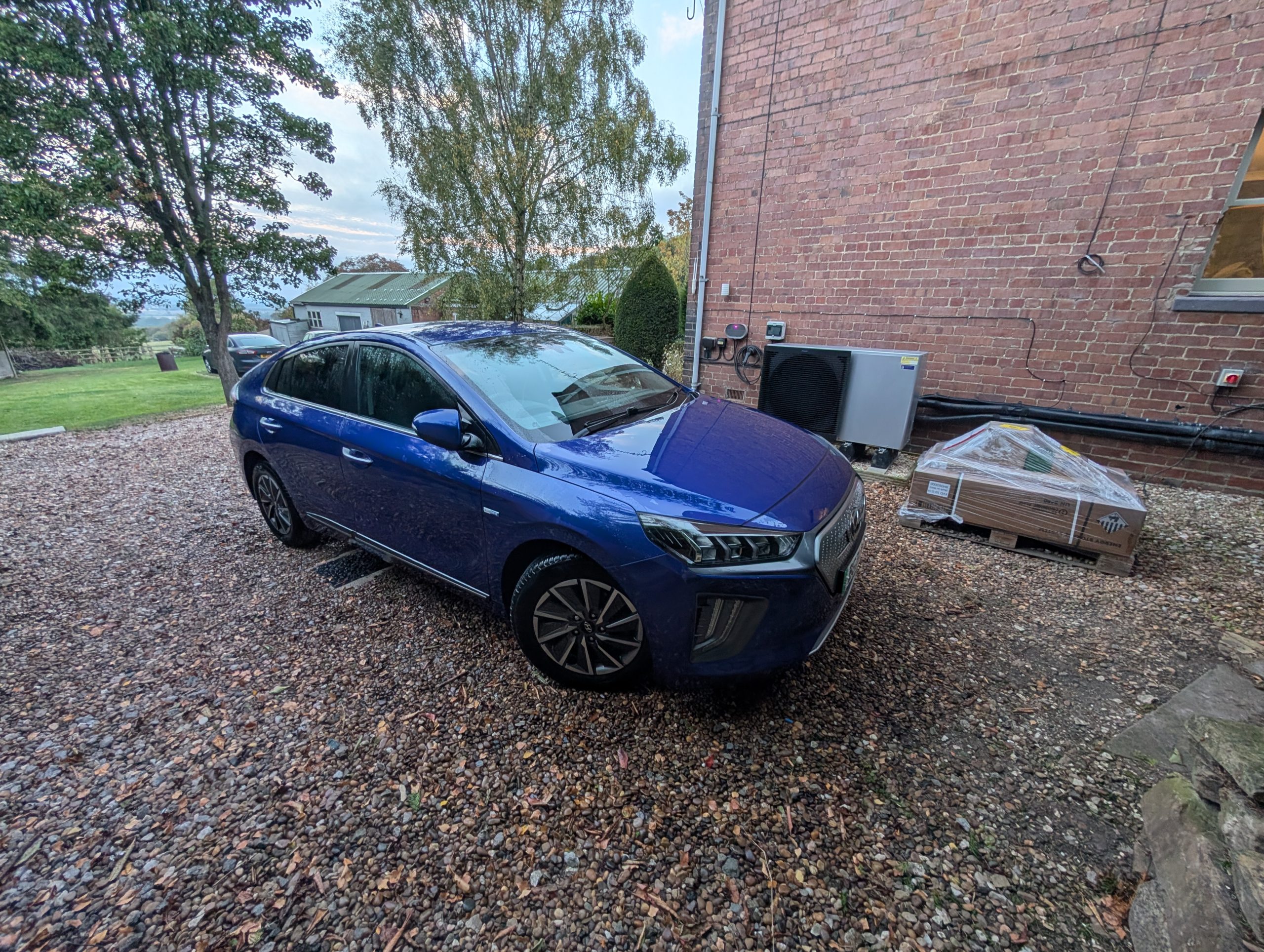
Now, I hadn’t realised how many seemingly random requirements there are with regards to battery location! Apparently they aren’t random, and are legal requirements, not Octopus requirements. You can’t have a battery within 1m of a heat pump, they must be at least 30cm from a window or door and can’t be under a window at all. There’s probably more, but those seemed to be the main ones that I kept suggesting breaking.
So, come installation day, our preferred location was out. But following a bit of a chat, we agreed on an alternative one further along the wall. With careful instructions to our jolly installation engineer/electrician to not damage the plants or he would be lightly murdered by Mrs Wonders 🙂
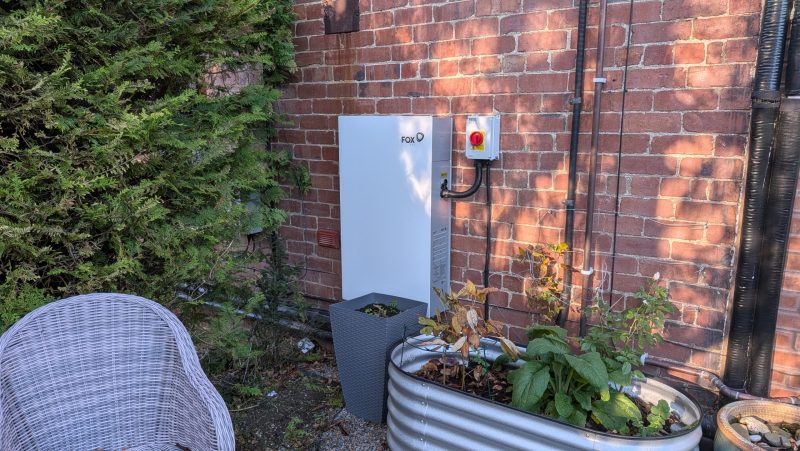
That decided, he ran us through his plans and if we were ok with where he was going to put things and run cables. We were, so left him to it. He was self contained and just got on with it. He kept us informed along the way, with a rough time when he would need all the power turning off. He then gave us a ten minute warning so we could turn anything off that might get grumpy with a sudden loss of power, PCs, teenagers, etc!
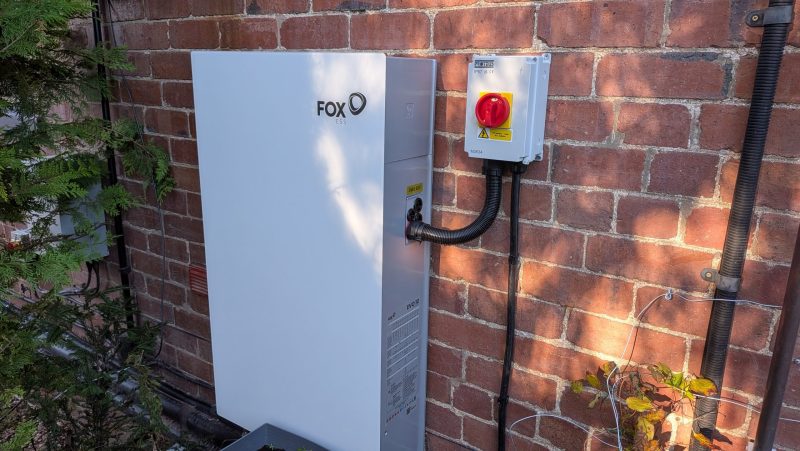
We got another new mini consumer unit alongside our car charger one – wired suitably so your car doesn’t steal all your battery charge – and another large armoured cable running outside following the path of the others. Round the side of the house to an isolator switch and the battery/inverter itself. I keep saying I’ll box the consumer units in, but…… it’s somewhere on the list.
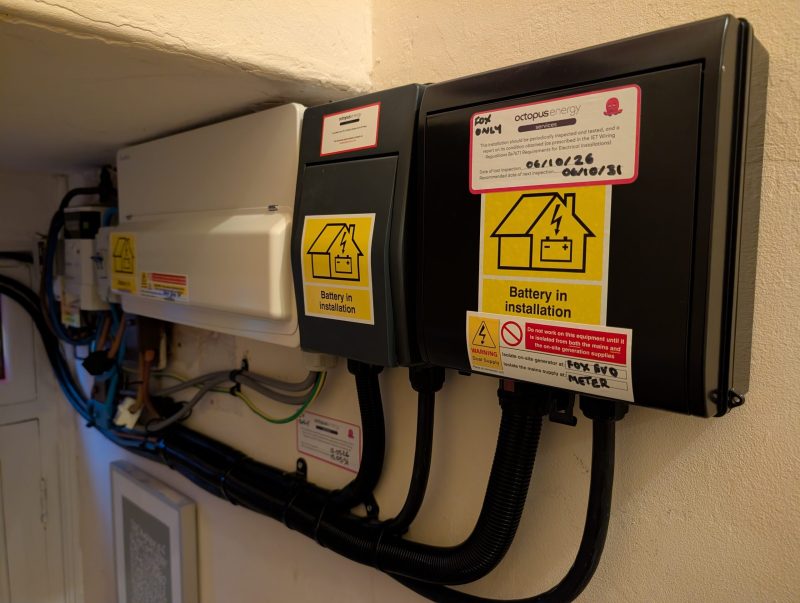
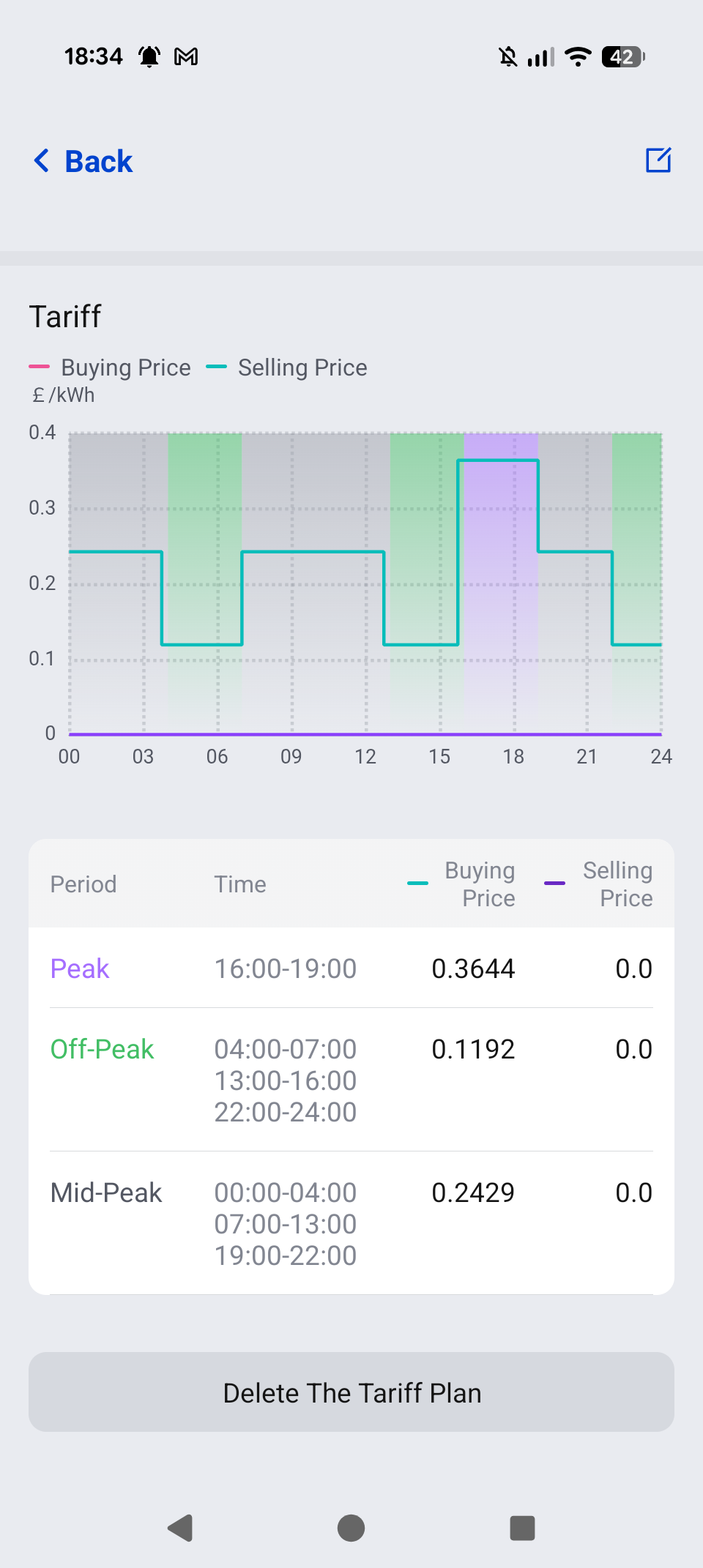
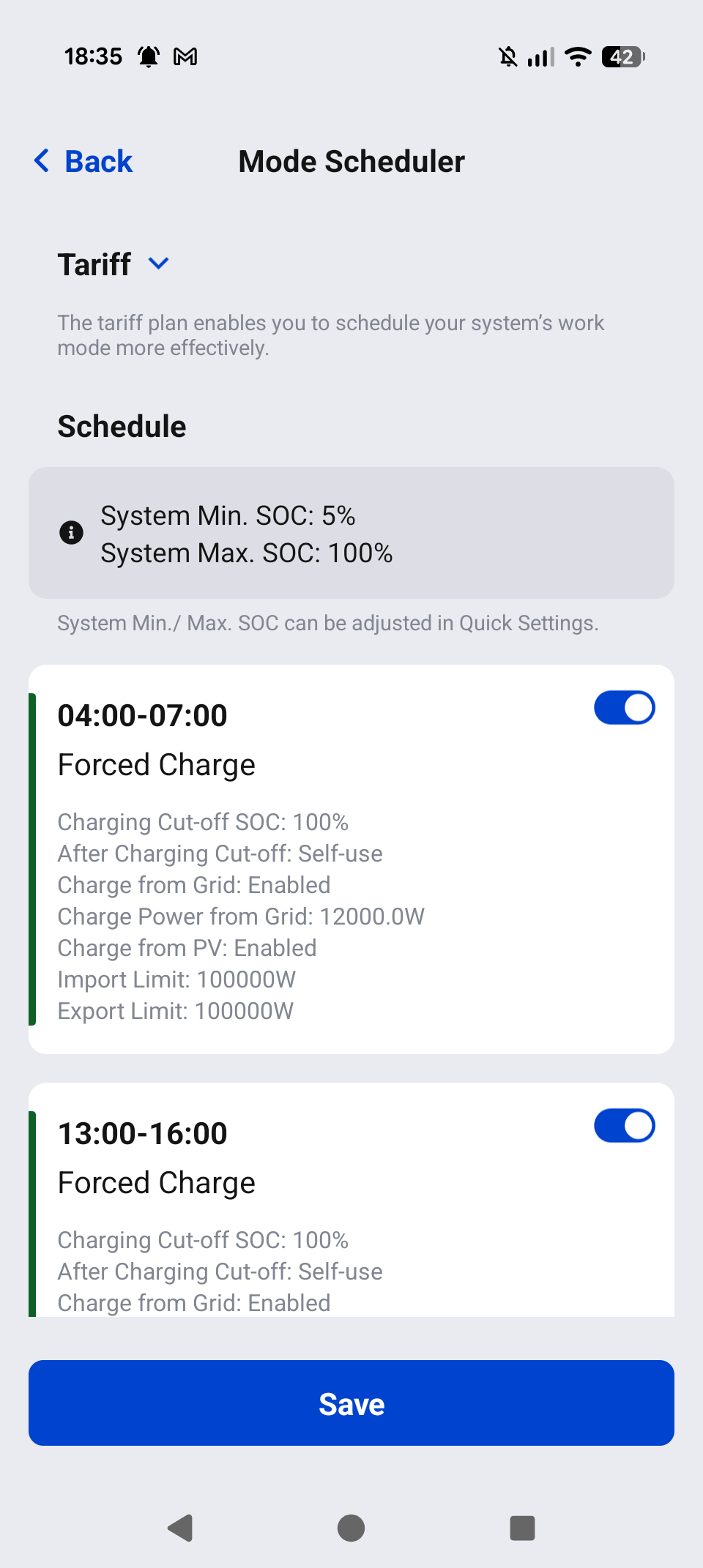
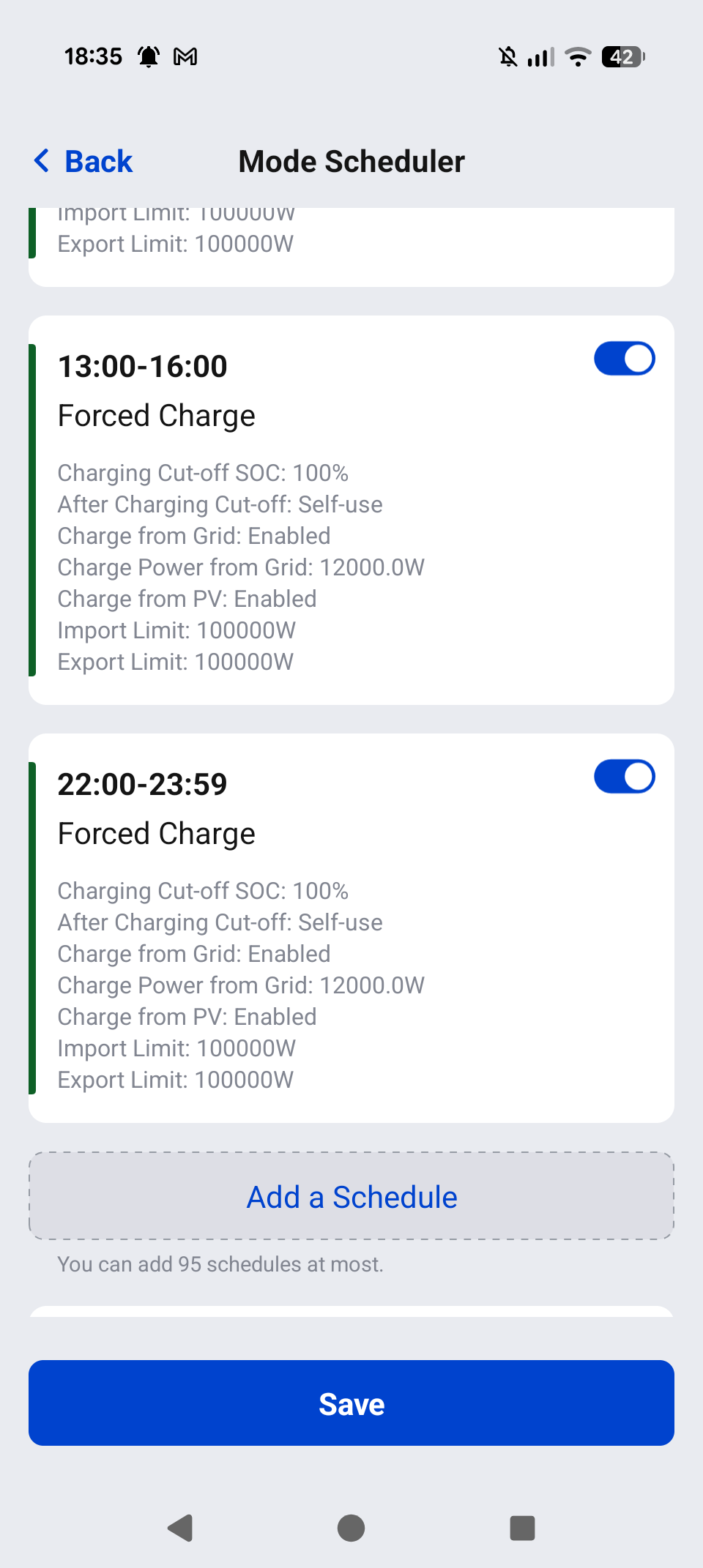
So, we were now installed. We had a guided tour of the app while our battery downloaded some software updates. “Fox Cloud” on Google Play if you want a nosey at it. The engineer would have set up my tariffs I’m sure, but I like playing with tech so preferred to investigate myself.
The below photos show screenshots for the Fox Cloud app.
How Much Can I Save With Home Battery Storage?
So, onto the savings, which for me is why we went for a battery. Now, bear with me, I can get quite dull on figures, and I might do some rounding as I go! We are on the Cosy Tariff which I think is the best tariff for when you have a battery and/or heat pump. The primary saving is hopefully getting rid of any peak usage. At the time I wrote this, the difference between peak rate and cheapest is 24.52p/kWh! Assuming we use all 10kWh of charge each day, that’s £2.45 each and every day, £894 a year. For us, we absolutely will most of the year due to our usage/usage patterns.
That’s not the only period you save though. There’s another cheap period between 4-7am. It charges up then, then gets used during the following 6 hours, prior to the next cheap rate. There’s 12.37p difference between cheap and average rate. So this works out at £1.23/day or £449/year.
The other cheap period is late at night, so we wouldn’t use the full 10kWh then, but even if you only used 1/3, that’s £150/year!
There are other far more nuanced savings to be had. Without whipping out spreadsheets – which I don’t have time in my life for – you’ll just have to ponder them. For example, we have tended to turn our heat pump down during the late afternoon peak (scheduled via an app), then back up afterwards. We all know by now that heat pumps prefer to run at a steady temperature to be most efficient. Having the battery enables us to leave it at one set temperature. I have no idea precise figures.
If you don’t as yet have a heat pump, you can see my full review of our installation here.
As this battery is all professionally wired, etc. It knows exactly when to discharge energy back to your home. Unlike some plug-in ones. (Yes, I know they’re not legal just yet, but I bet some of you have been looking!)
You’ll have to do some of your owns sums based on your usage, but for us, the savings absolutely add up, and quickly too.
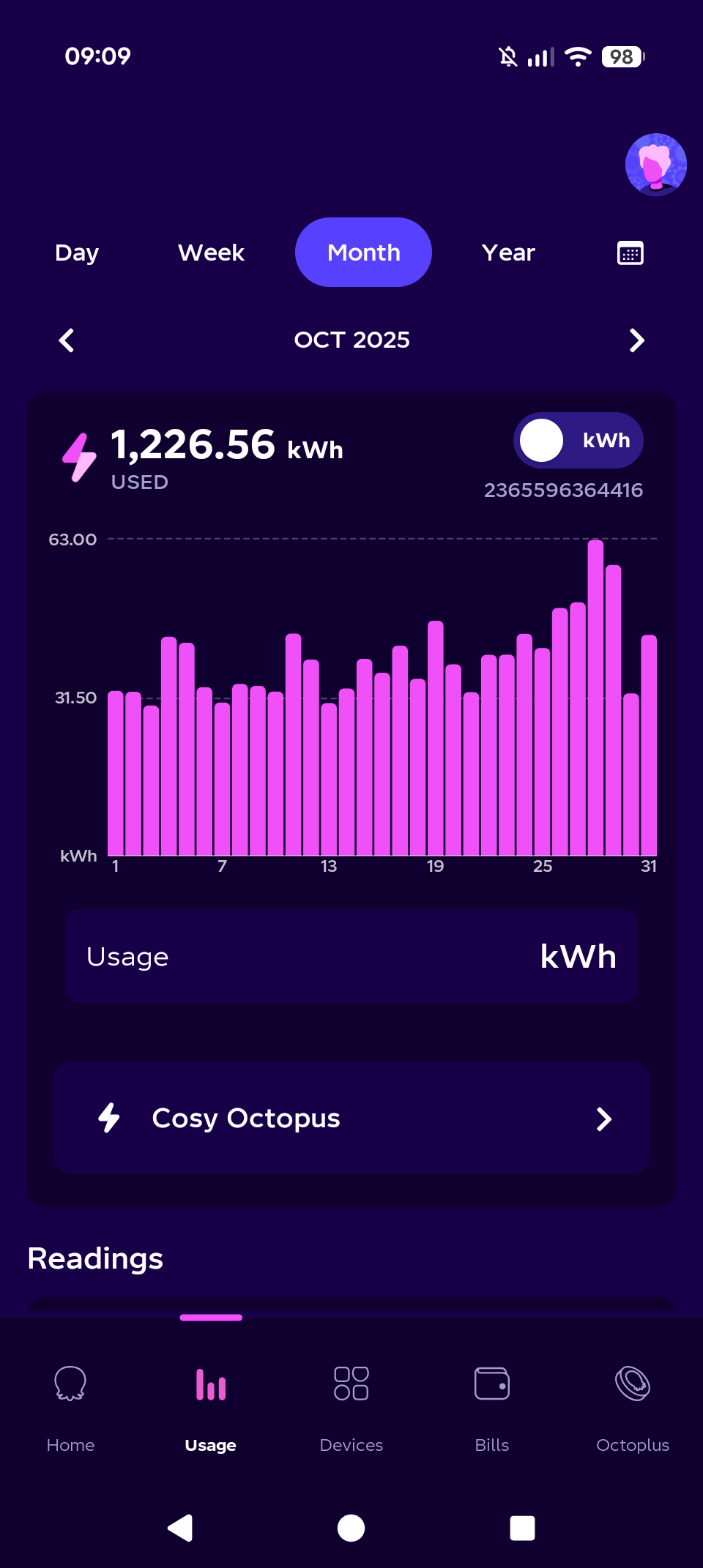
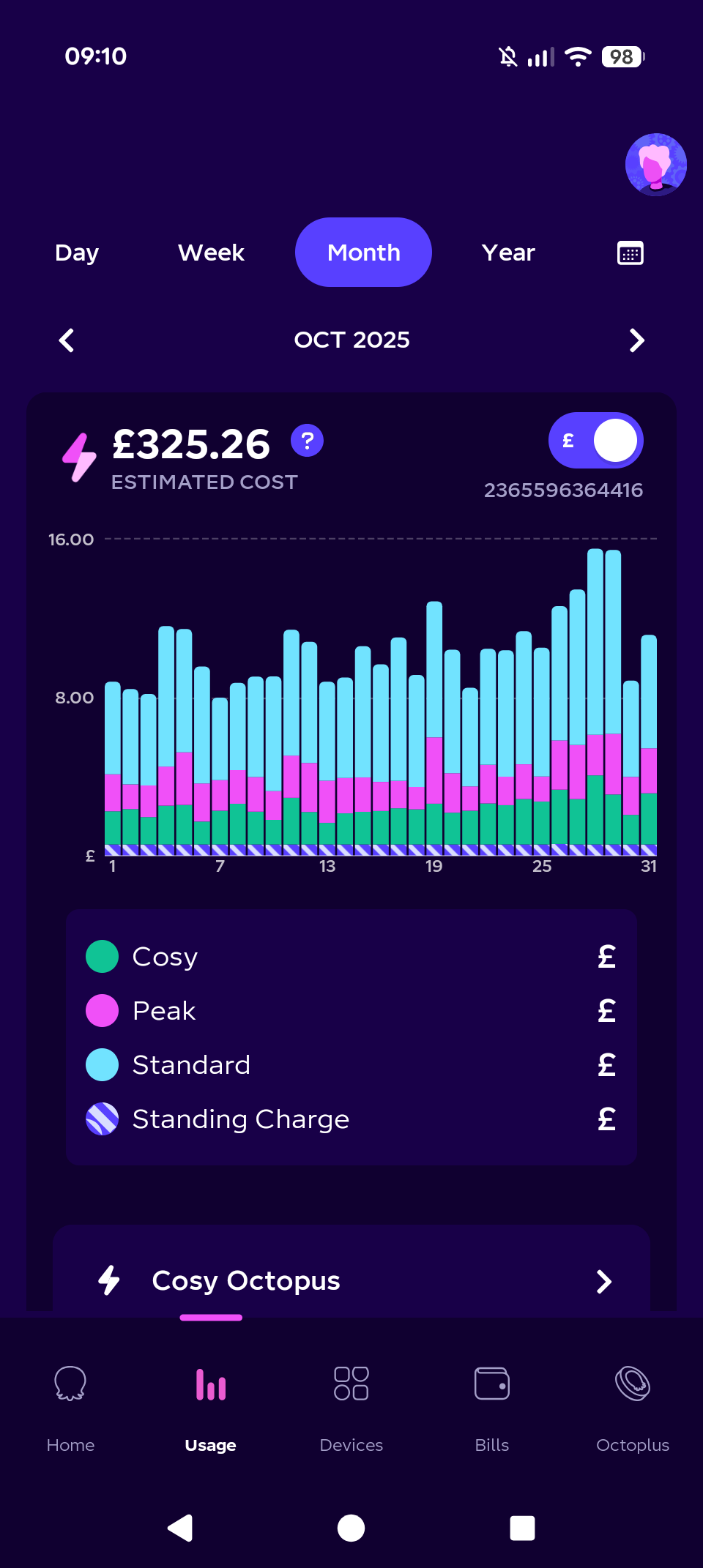
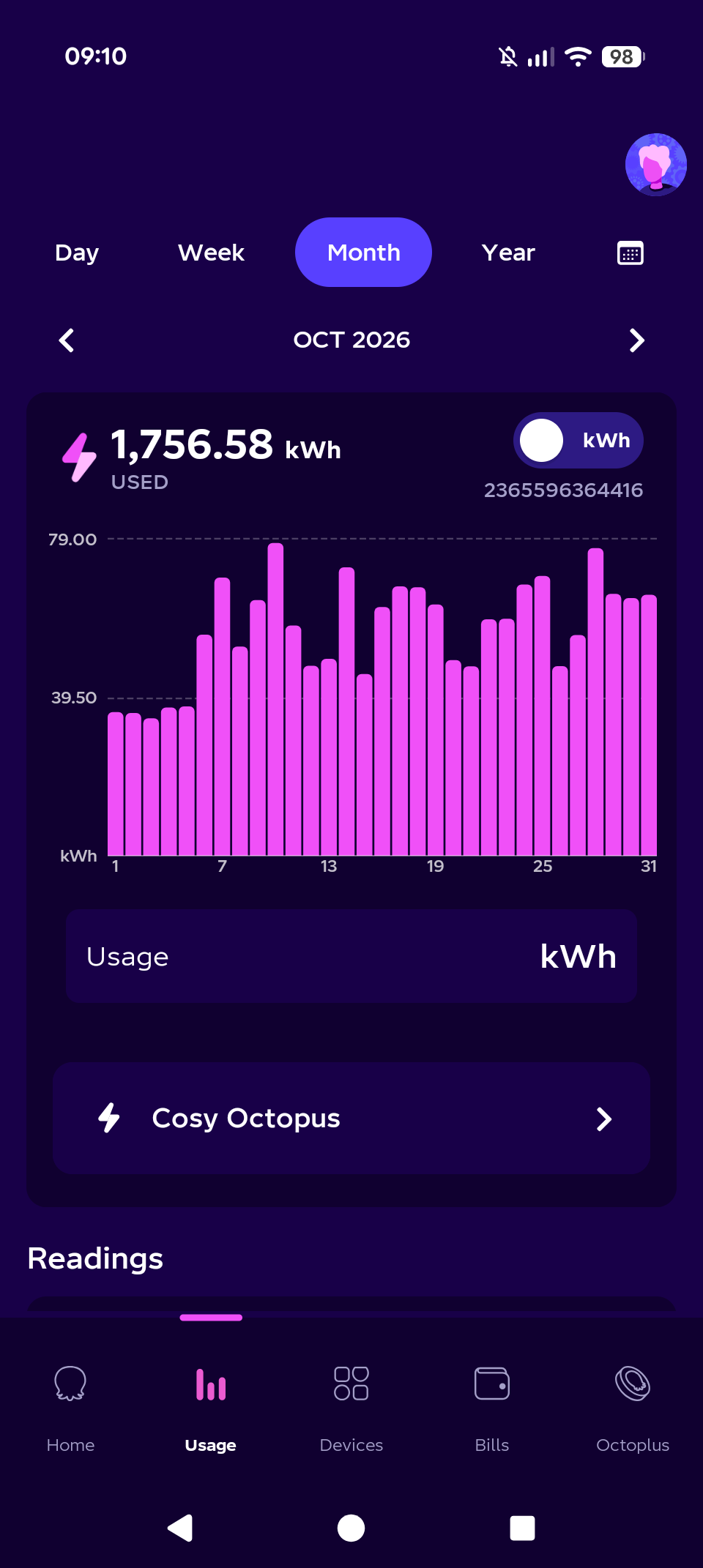
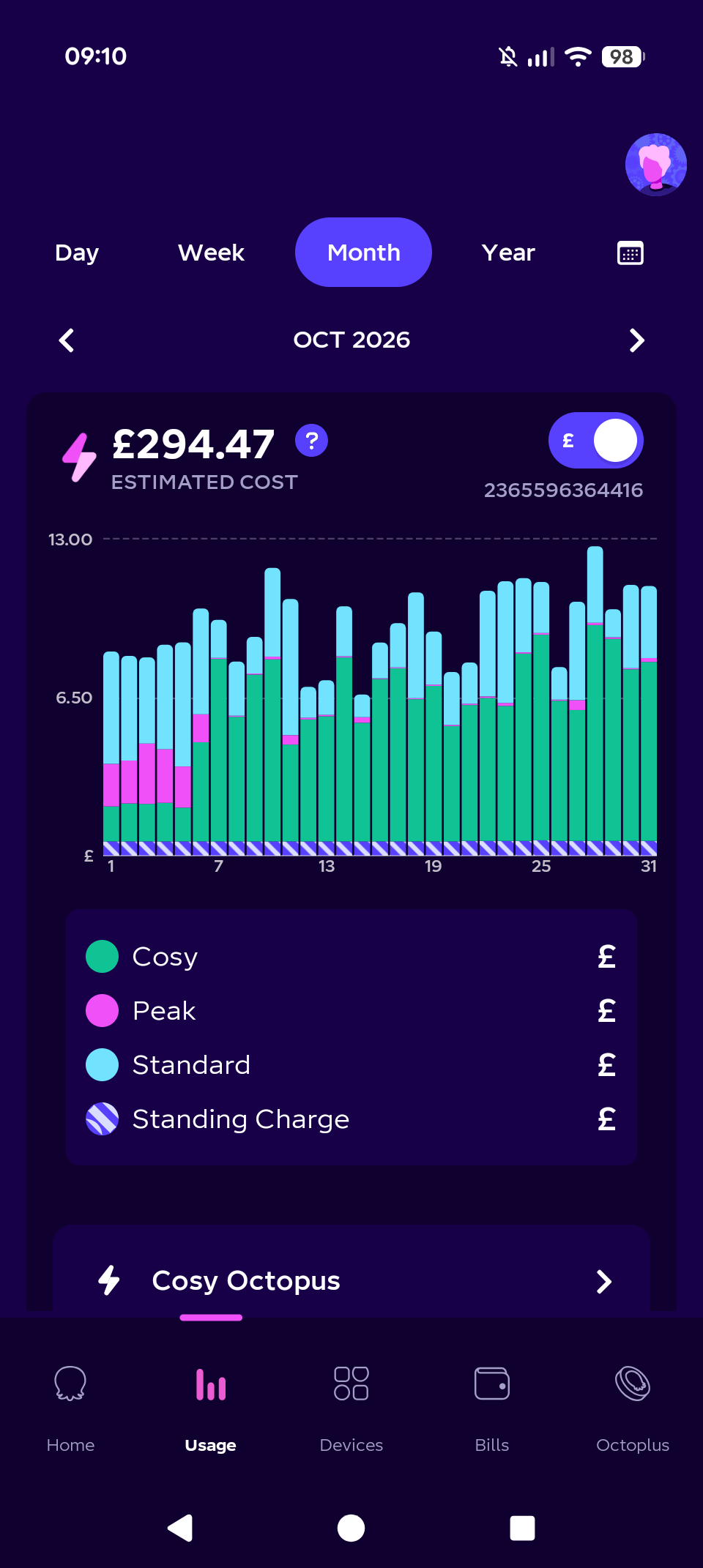
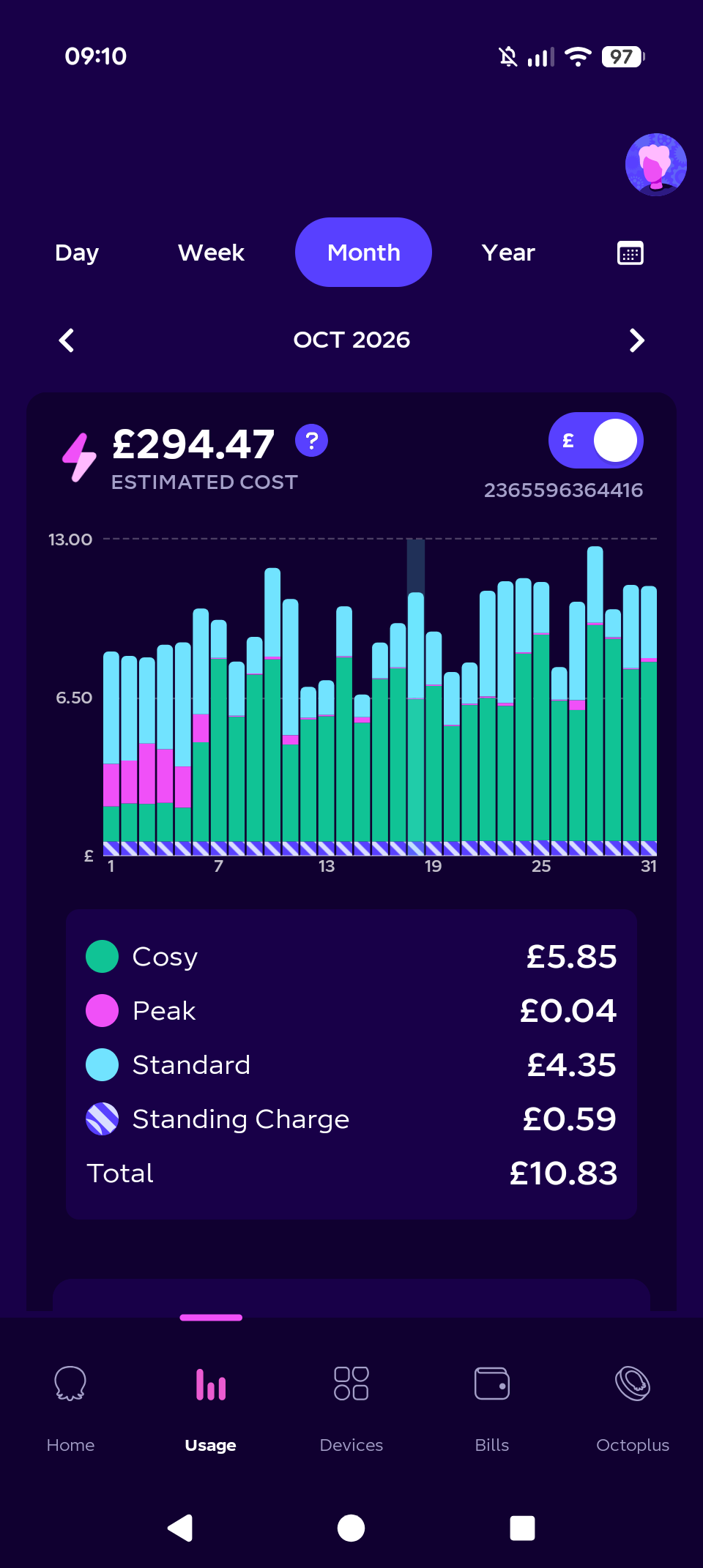
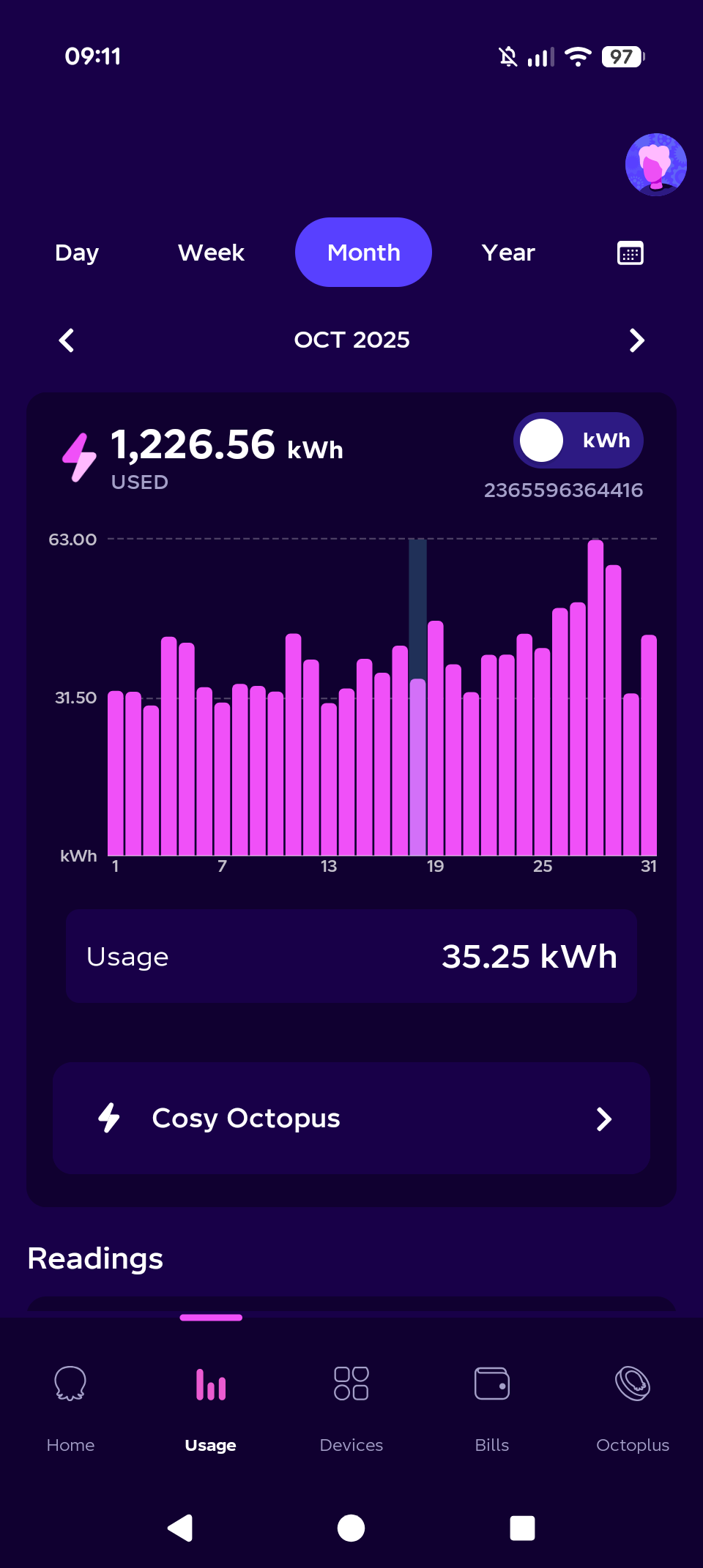
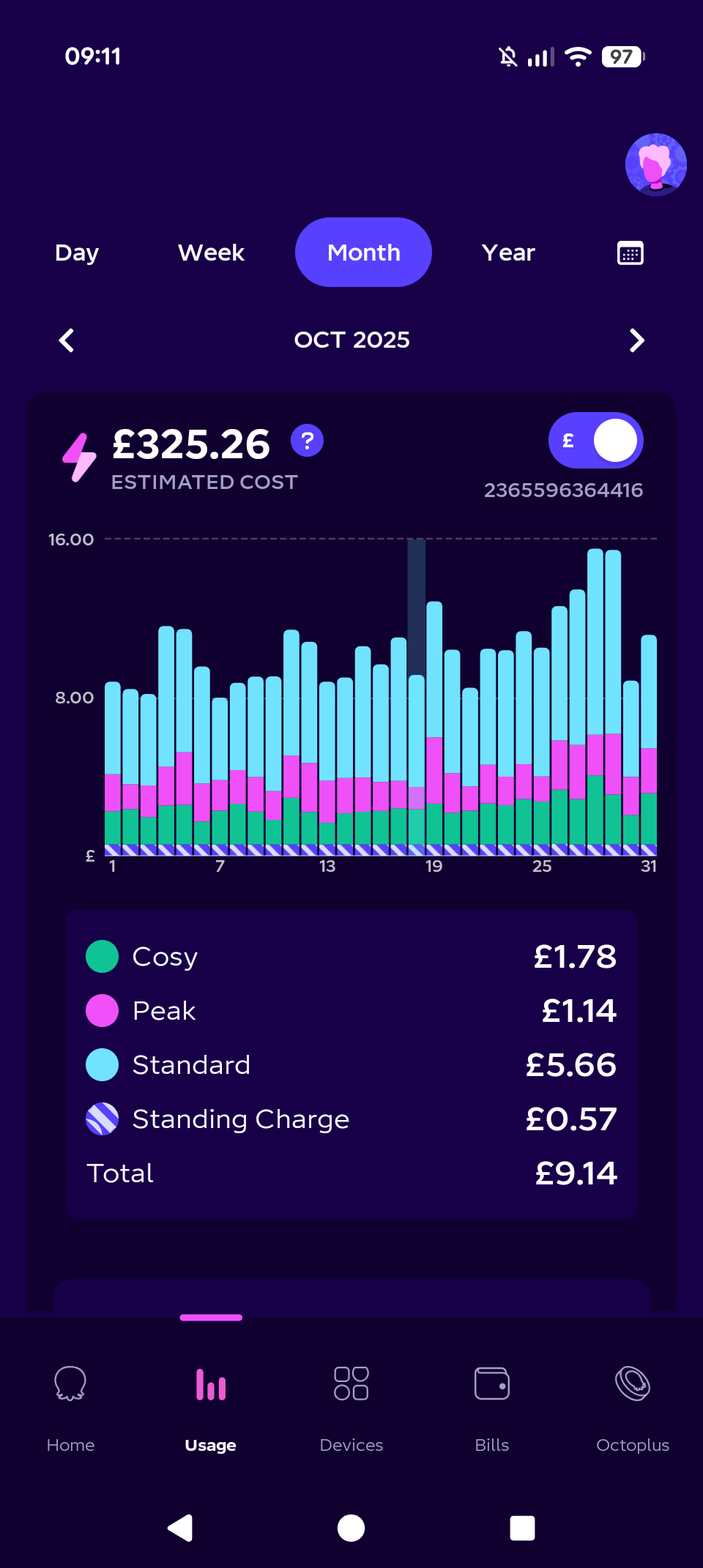
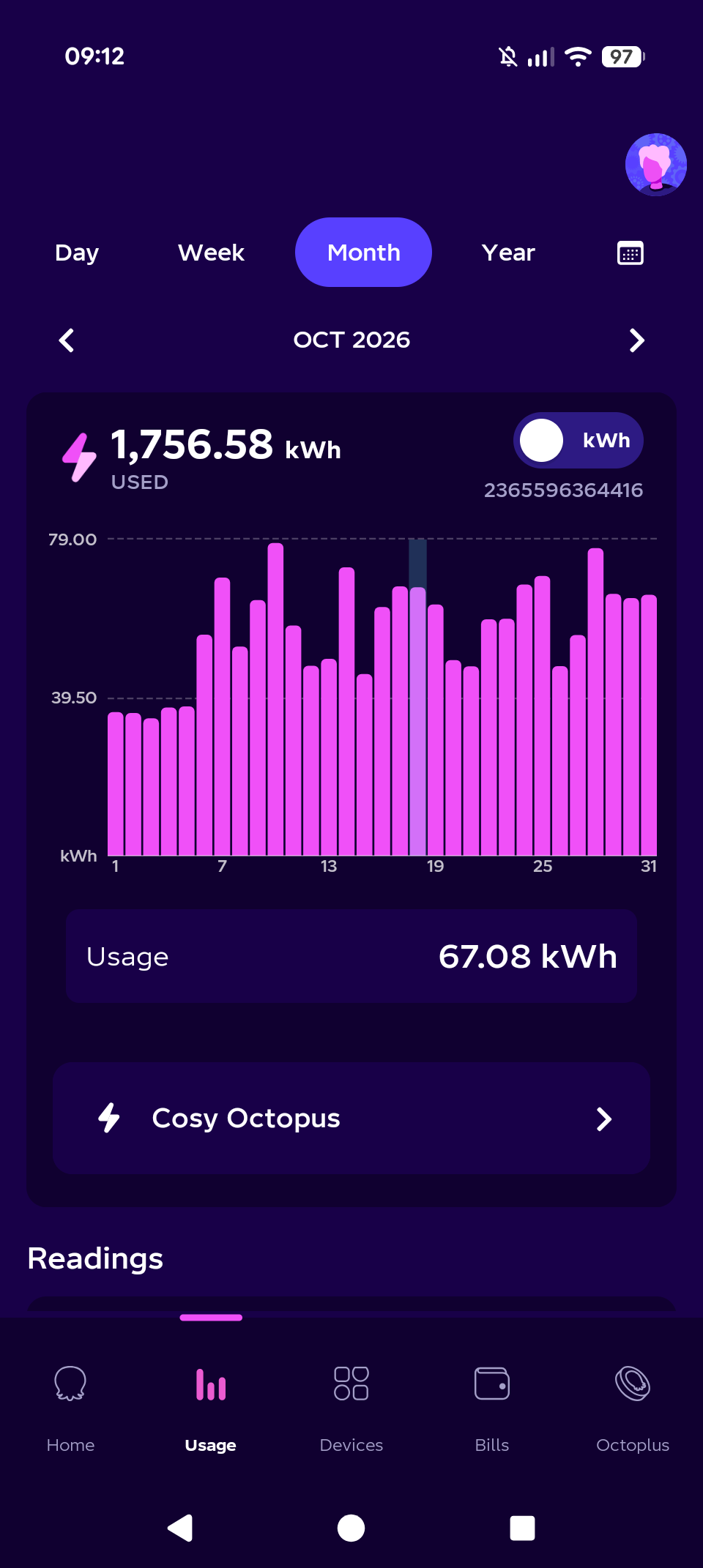
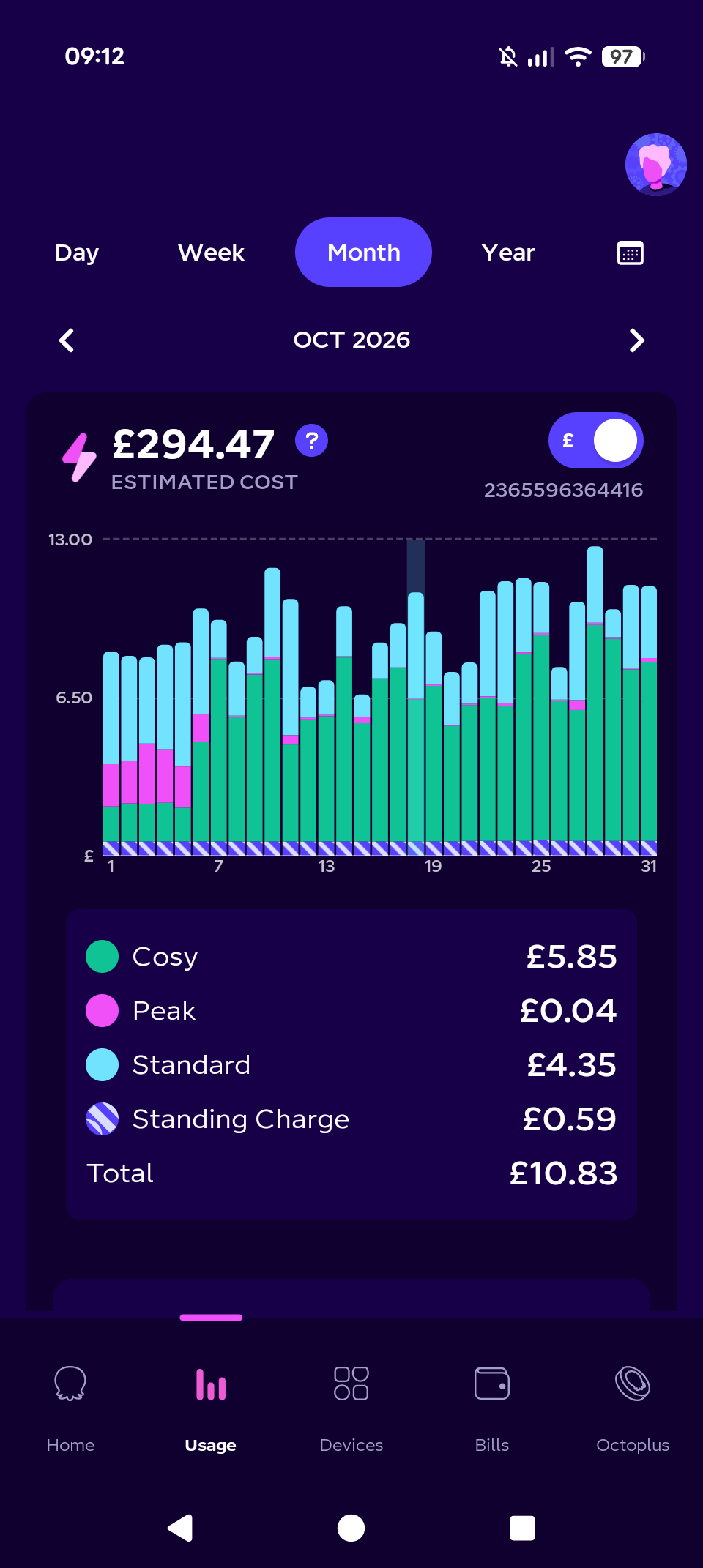
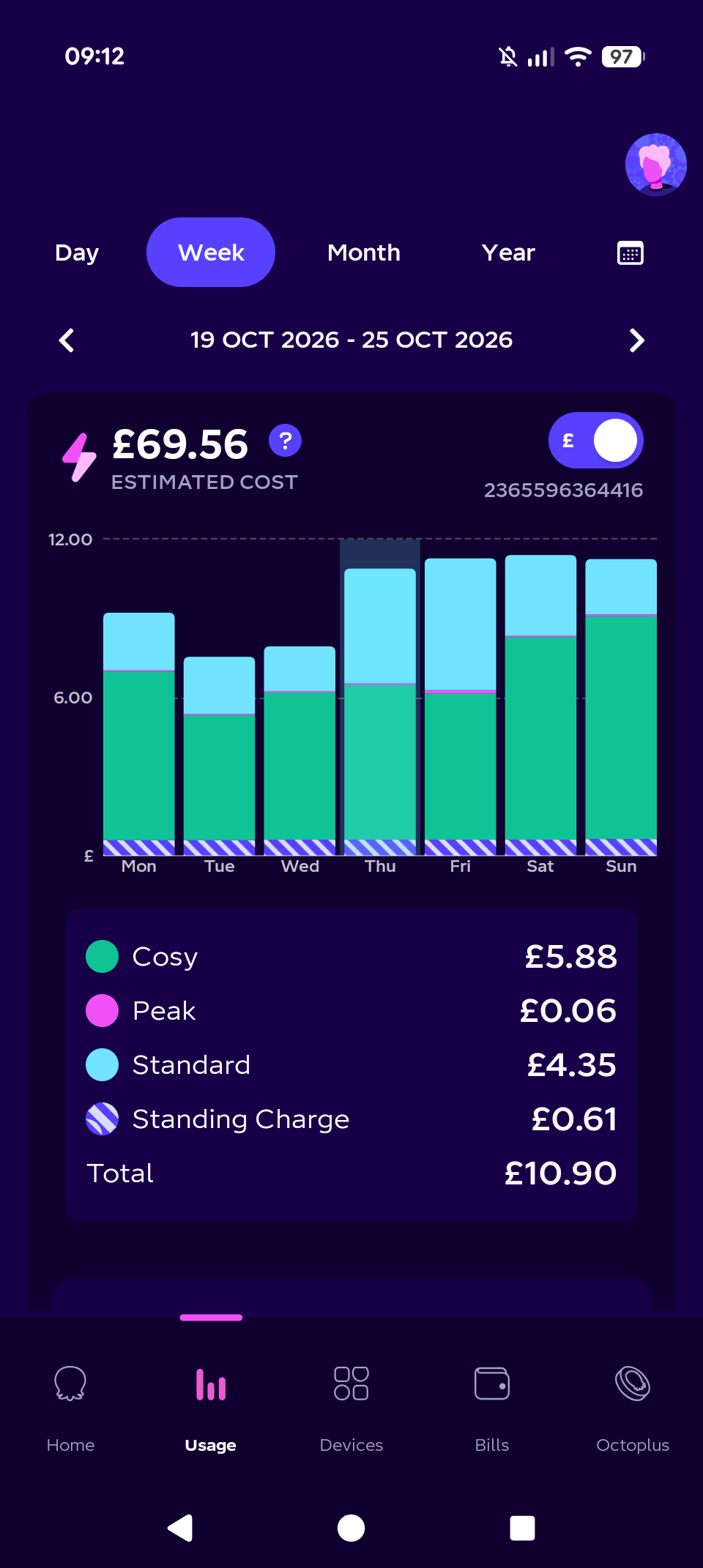
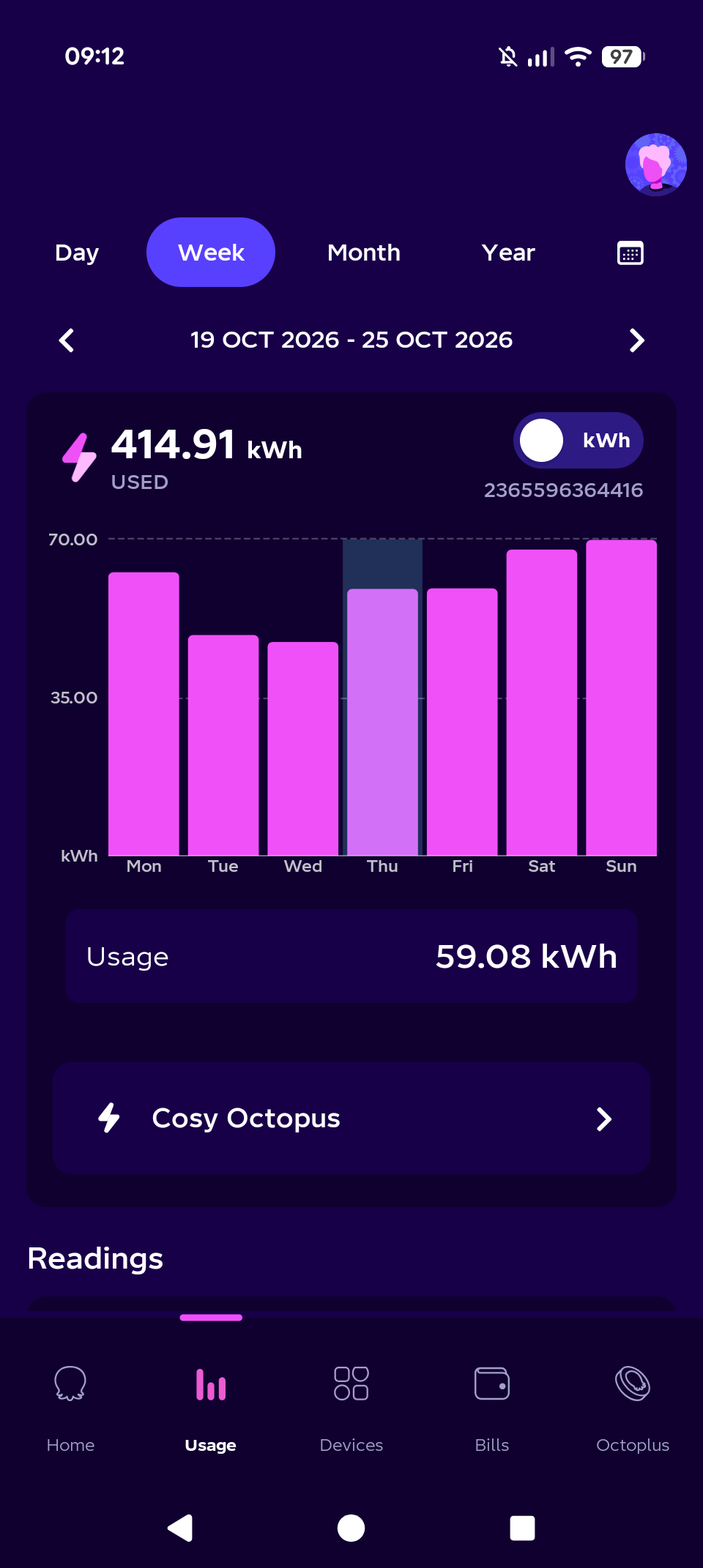
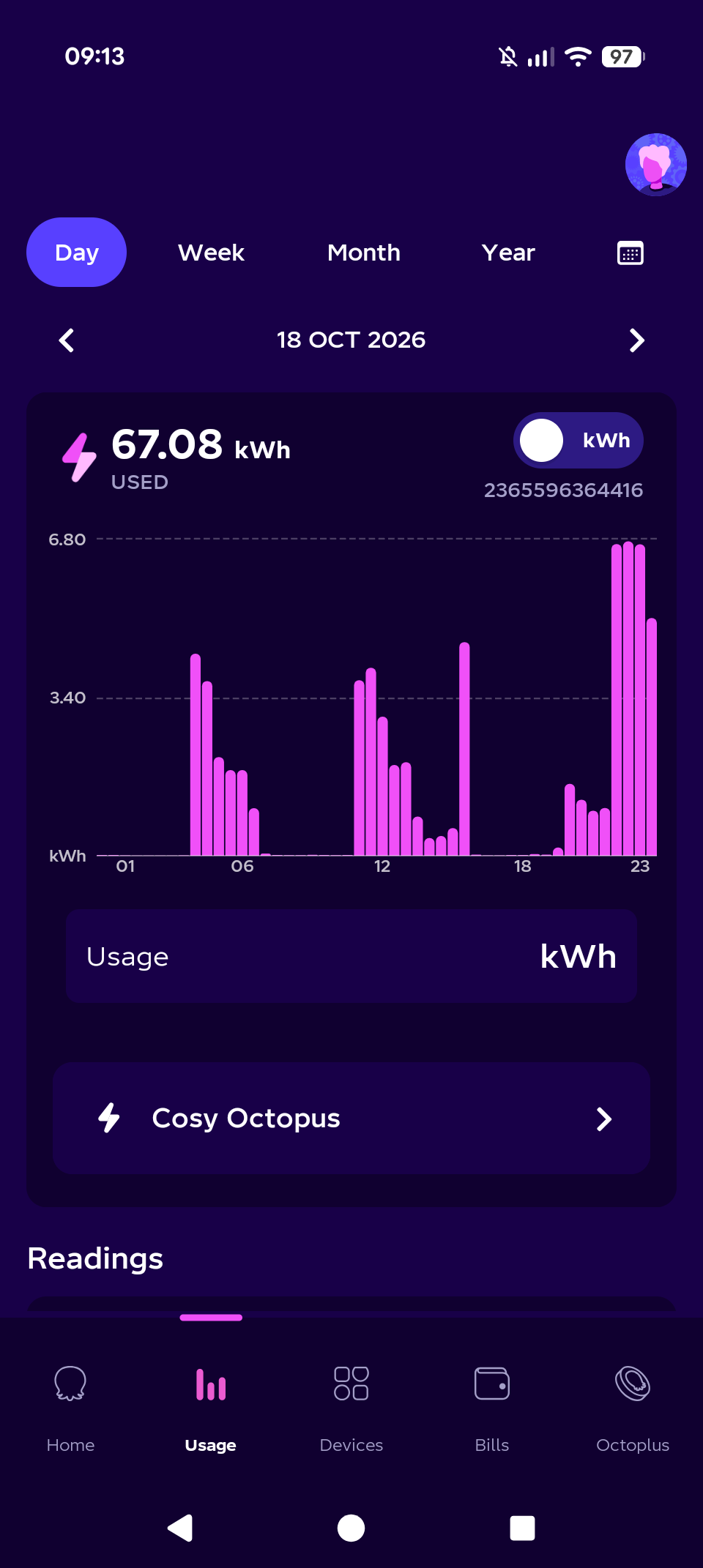
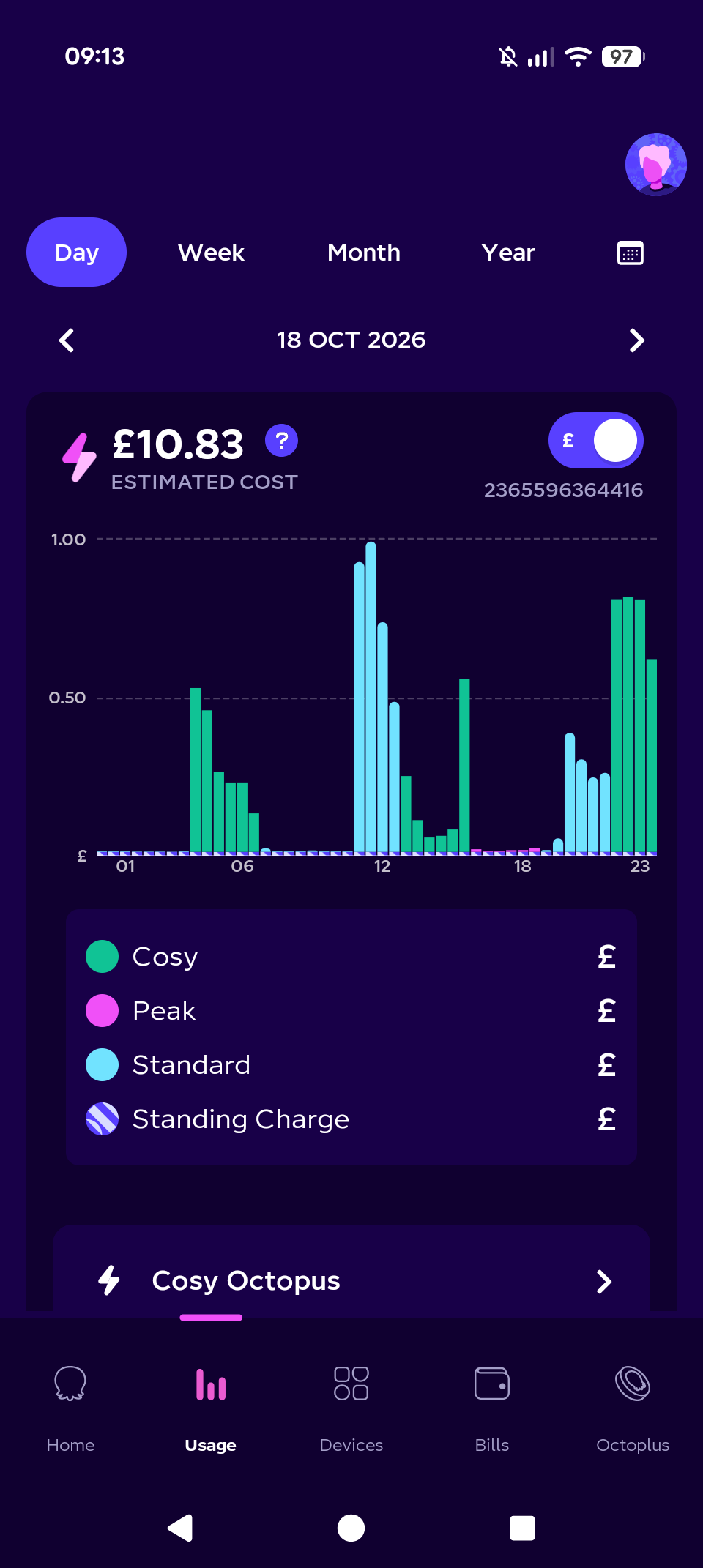
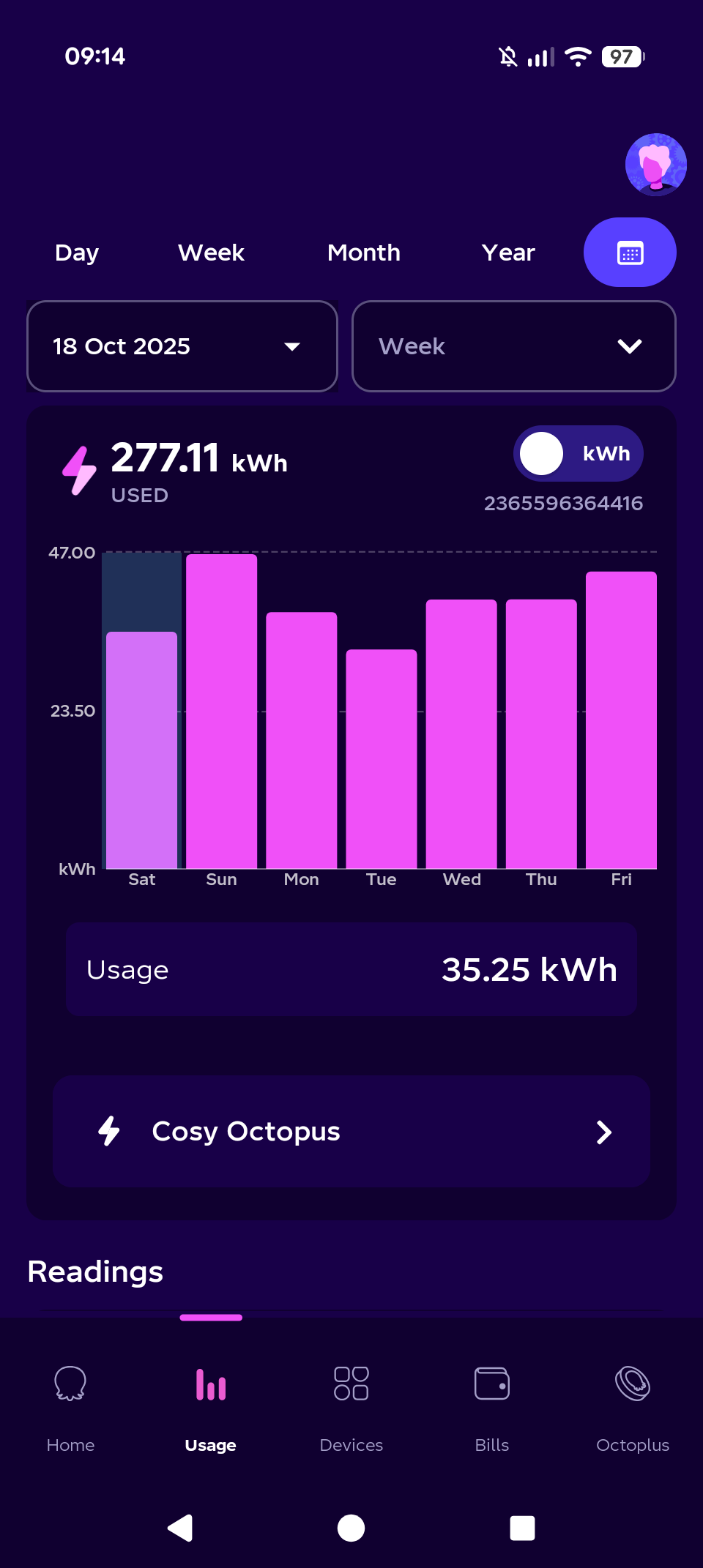
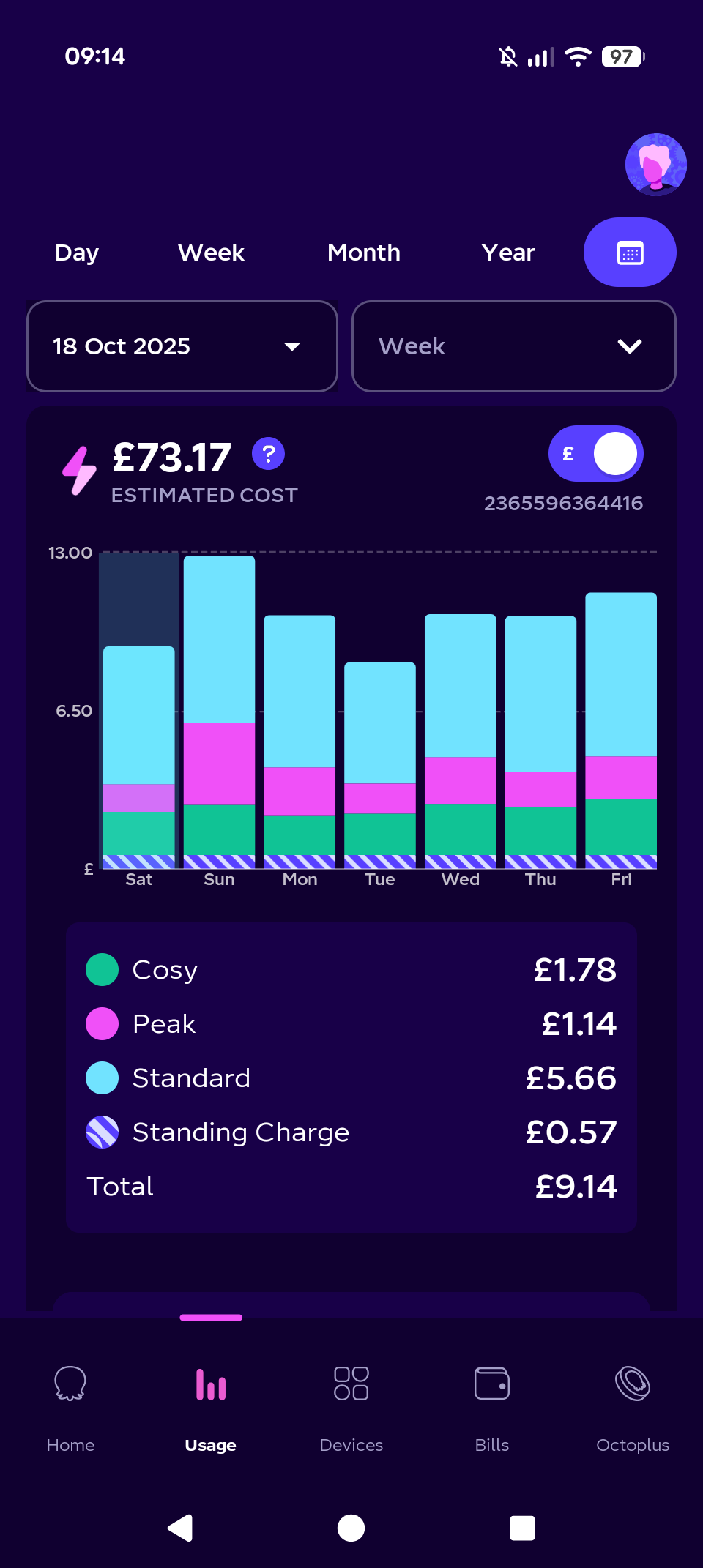
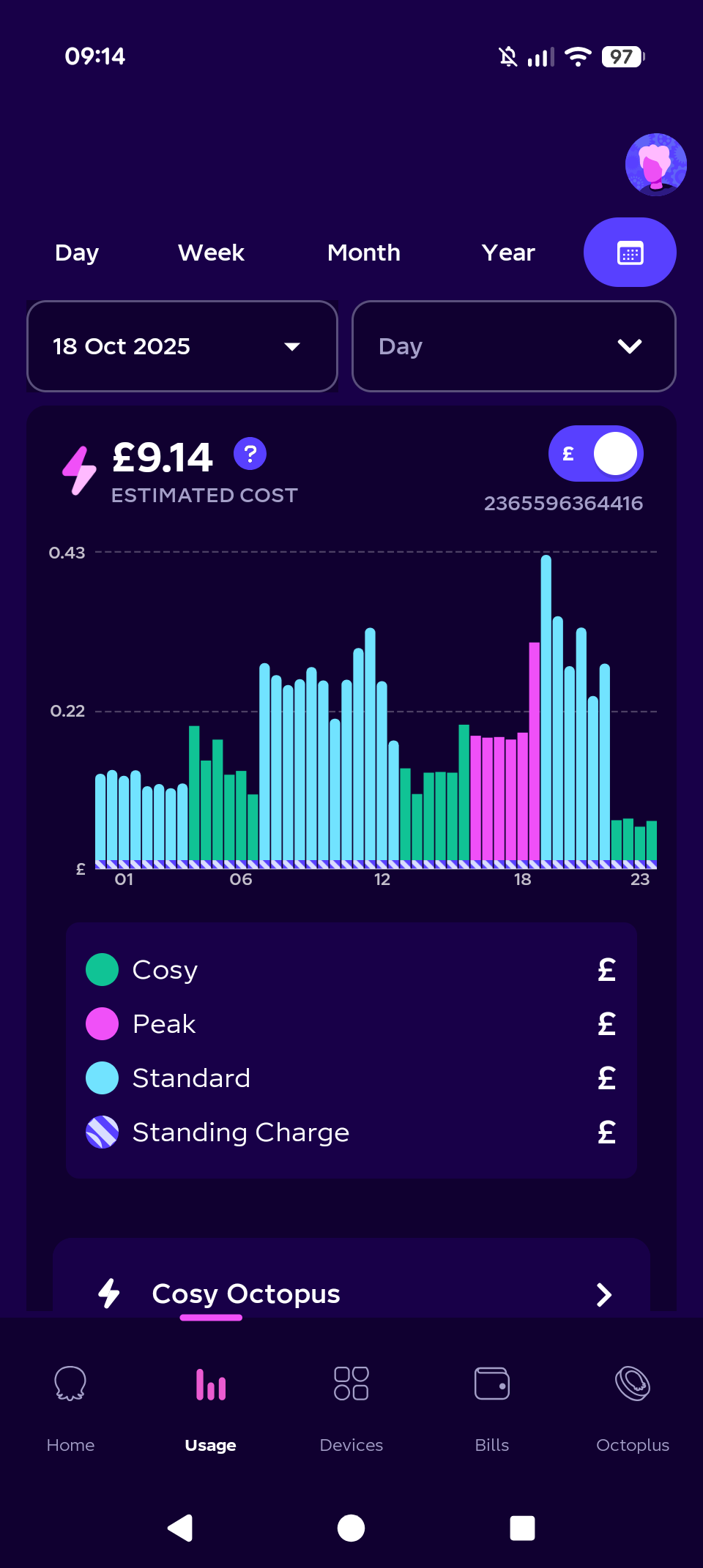
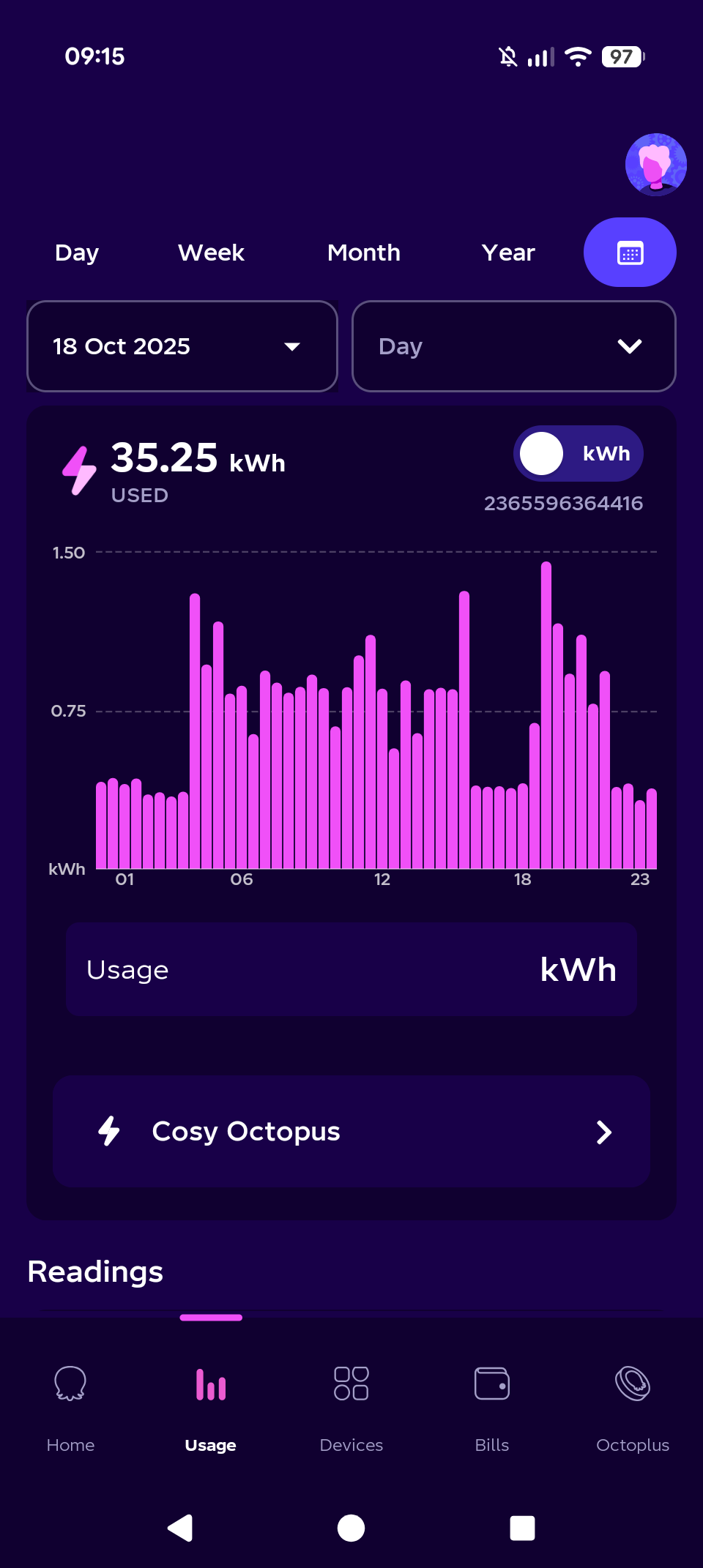
Below are a load of screenshots from the Octopus Energy app (scroll to the bottom to see these). These show various daily and weekly/views, comparing Oct 2025 and 2026. You can clearly see our peak usage turn to practically zero and the standard rate dramatically drop too. I should say, that there was unfortunately a 15% electricity price increase around the 20th, so this is playing havoc with the clarity of our figures. Also, just as the battery was being installed, the weather got much cooler so we started using a lot more electricity in general! (Not helpful I realise – but out of my control!).
It’s definitely saving us quite a lot of money each month. We would benefit further from a little more battery storage I feel as we are a very high usage household – but it’s probably a case of diminishing returns. We have, however, comfortably got rid of almost all peak usage. An additional 5kWh would be nice for our usage I would say. Once plugin batteries are eventually approved by the powers that be, that feels like a good addition.
This is all without solar panels in the equation, so quite minimally invasive! That said, if Octopus ever start fitting panels to slate roofs, the battery is cunningly positioned to be reasonably easy to connect. I’m rather keen to investigate those next, and potentially a plug-in solar panel arrangement on my workshop for further savings, watch this space!
How Many Years will it Take to Break Even with a Home Storage Battery?
NB – disclaimer – the above are all my figures – nothing official – which aren’t perfect. It’s not 100% efficient charging and discharging a battery for example. So the final outcome may differ, but you get the idea. I think it will take 4 years ish to break even on a typical installation price with our sort of usage.