Malta has long attracted British visitors thanks to its warm climate, deep history, and remarkably easy accessibility from the UK. But for those who want more from a holiday than sunshine and sightseeing, the arrival of Verdala Wellness Hotel marks something genuinely different on the island.
Sitting on the edge of the quiet hilltop town of Rabat, this adults-only property brings together thoughtful wellness programming, considered design, and a kitchen that takes local cuisine seriously.
A Setting That Earns Its Reputation
Verdala sits on a ridge above a broad valley on the western side of Malta, a position that gives it a visual reach you simply do not find in the busier resort towns along the coast.
The hotel occupies land with real historical weight. The site was home to the original Grand Hotel Verdala, a landmark that opened in the early 1970s and became one of the island’s most recognisable buildings during Malta’s tourist boom of that era.
Designed with clear modernist intentions and furnished to a high standard for its time, the original hotel drew international visitors and even played a role in diplomatic negotiations during the late 1970s.
That building was eventually demolished after falling into disuse, and the current property was developed by the AX Group, a Maltese hospitality company with several well-regarded hotels already operating across the island.
The new Verdala is smaller and more focused than its predecessor, with 46 rooms and suites rather than the sprawling scale of the original. It is adults-only by design, which suits the wellness focus and keeps the atmosphere calm throughout.
Rooms That Balance Comfort With Calm
The 46 rooms and suites at Verdala are designed with rest in mind. The colour palette runs through warm neutrals (browns, taupes, creams), with textural interest added through materials such as plastered walls, ceramic fittings, and handmade decorative elements. There is nothing fussy or overdone about the spaces; the intention is clearly to create an environment that helps guests switch off rather than stimulate them further.
Junior suites offer generous living areas with a separate lounge, a circular stone bathtub in the bathroom, and private terraces overlooking the valley towards the distant coastline. The terraces are equipped with sunloungers, a hammock, and a hot tub, which makes them genuinely usable rather than merely decorative. Filtered still water is provided throughout the day, and the minibar keeps energy snacks on hand for those following a structured wellness programme.
Good internet connectivity is also worth pointing out. A stable connection allows guests who want to work from their rooms to complete their tasks without hassle. The signal is also strong enough to support those who want to engage in other special online activities, such as playing casino games on MrQ Casino or similar platforms. Thanks to that reliable connection, guests who want to engage in spinning slots online or streaming films on Netflix can do so without any issues.
The Wellness Offering: Structured, Substantive, and Flexible
What separates Verdala from a standard hotel with a spa is the way wellness is woven through the stay rather than offered as an optional add-on. The spa occupies the entire lower-ground floor and is built around a hammam-style relaxation space with vaulted ceilings, a sauna, a salt cave, and a pool that draws in natural light from the gardens outside. Hot and cold plunge pools are available for those who follow contrast therapy as part of their routine.
Before arrival, guests are invited to take part in a video consultation with the spa director, which allows the team to build a picture of individual needs and preferences. On check-in, a fitness assessment using Technogym equipment helps map out starting points across mobility, balance, and strength.
Group classes in yoga and meditation run twice daily in a dedicated circular room and are open to all guests without additional booking. The treatment menu is extensive, covering options that range from conventional massages and facials through to PEMF therapy, EFT tapping, postural assessment, life coaching, and various multi-element rituals combining massage, breathwork, and heat.
Food and Drink Worth Coming Back For
The centrepiece restaurant is Griffin Brasserie. The restaurant’s approach keeps things rooted in the Mediterranean while avoiding the predictable choices that can make hotel dining feel interchangeable with that of any other property in the region.
The menu changes to reflect what is available locally, and the kitchen clearly enjoys working with traditional Maltese ingredients in ways that feel current rather than nostalgic. Dishes like courgette flowers prepared three different ways, an octopus bolognese lasagne with bechamel foam, and a gilthead bream served alongside smoked eel reflect the kind of cooking that rewards attention. Desserts are more conventional, but the overall standard across the meal is high enough to make the restaurant worth visiting more than once during a stay.
Rabat and Mdina: Two Towns That Reward Slow Exploration
The hotel’s location near Rabat is one of its genuine advantages, though the town itself is often overlooked by visitors who gravitate towards Valletta. Rabat has been continuously inhabited since pre-Roman times and contains a notable concentration of historical sites within a very short walk of each other.
The Domus Romana, a first-century BC Roman villa with original mosaic floors still visible, is a remarkable find for what is essentially a small neighbourhood museum. St Agatha’s Museum holds a dense collection of artefacts covering centuries of island history, while the catacombs beneath various churches provide a direct connection to the earliest Christian communities on Malta.
The high street and main square are entirely local in character, with family-run bakeries, traditional cafés, and a handful of bars that have changed little in decades.
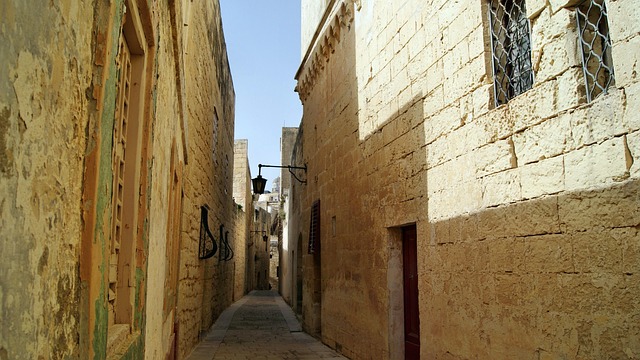
The walled city of Mdina, which sits immediately adjacent to Rabat and was once Malta’s capital, is within comfortable walking distance. Known across the island as the Silent City, it still carries that quality; the streets are narrow, traffic is minimal, and the baroque palaces and cathedral give it an architectural richness that justifies the short walk from the hotel.
Who Verdala Is Really For
This is not a hotel for guests seeking a party scene or a beach club atmosphere. It is quiet by intention, and the adults-only policy reinforces that.
The wellness programming rewards engagement; those who arrive with specific goals around fitness, rest, or stress management will find the structure and the expertise to make real progress during a stay.
For British travellers in particular, Malta has practical advantages that are easy to take for granted. English is an official language on the island, direct flights run from most UK airports year-round, and the climate makes Verdala a viable destination even in winter, when a break from the grey is most needed.
Set against the strong wellness proposition, the distinctive food, and the underrated neighbourhood it calls home, Verdala makes a compelling case for a very particular kind of trip, one built around doing less, but doing it properly.

